Guided implant planning · Muscat, Oman
08:00 – 22:00 · Reply within 24h +964 774 764 4134 [email protected]
Swiss-backed digital implant planning

The Future of Guided Surgery

Upload a CBCT. Receive a consultant’s report and a print-ready surgical guide — in as little as 3 days. Built for dentists across Iraq and the Gulf.

CR 1508999 Health Licence 1508999 Swiss & Italian systems Reply within 24h
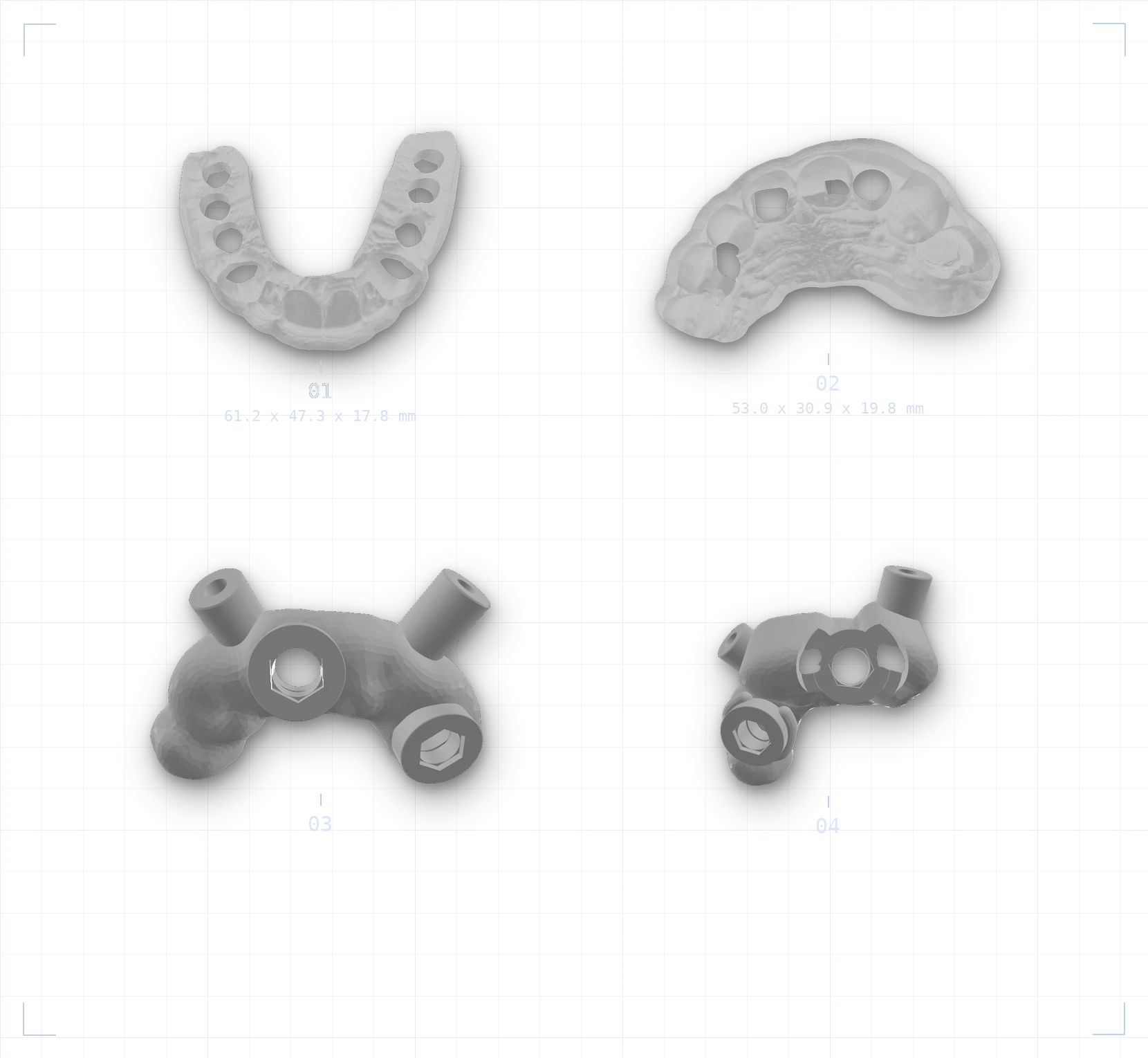
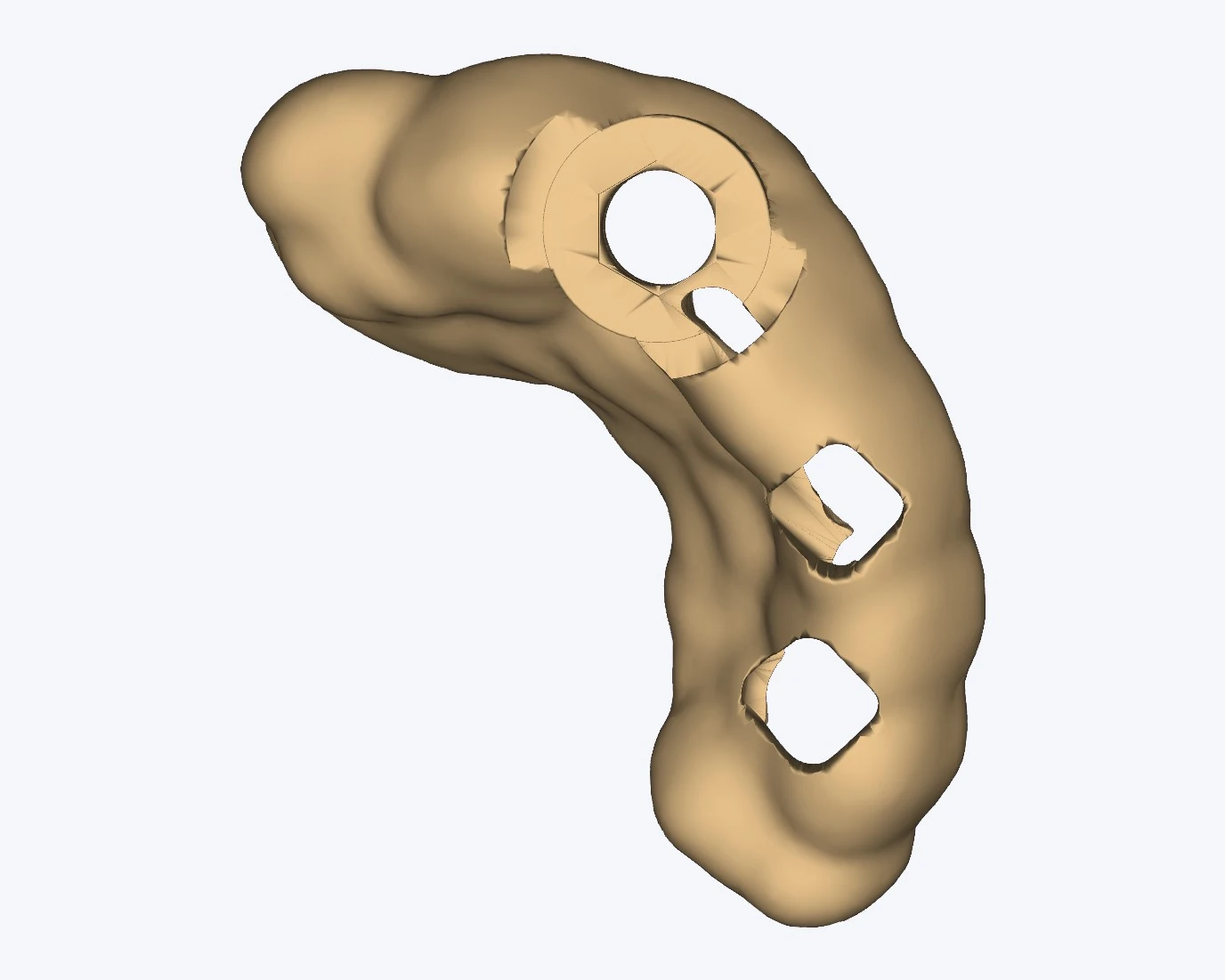
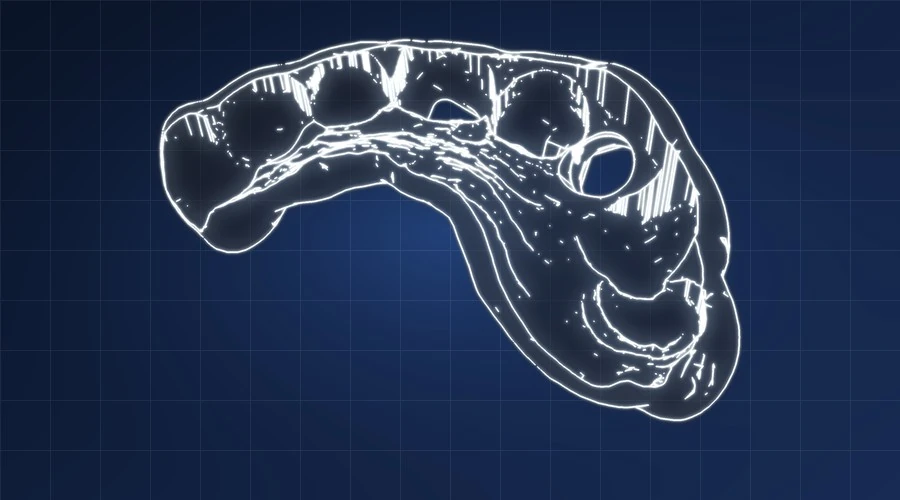
A measured plate of four surgical guides made by Future Guide's own lab at one common scale, labelled with the dimensions measured from their files

Four guides printed in our own lab, shown at one scale. Every dimension is measured from the file the guide was printed from, none typed.

Six ways to start

Published cases, by other clinicians

Four published cases, planned the way we plan

Worked examples of the workflow this service is built on — the same sequence of guides, planned in the same software. They are here because they are instructive, not because they are ours.

Case one · whose case this is

Dr. Francescantonio Polito

Published in the clinical literature. Future Guide neither planned nor performed this case, and claims no part of it.

Full-Arch Immediate-Load Rehabilitation with a Sequential Guided Workflow

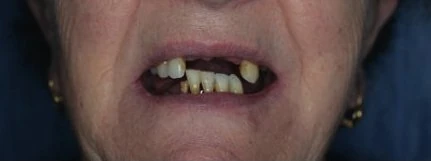
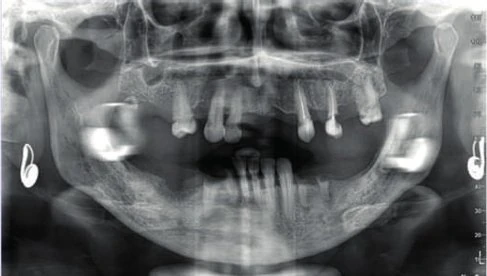
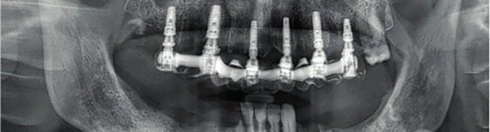
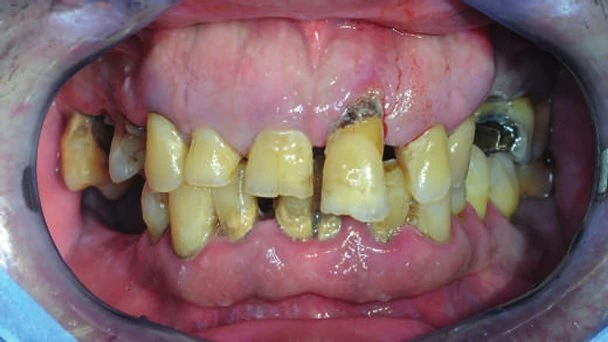
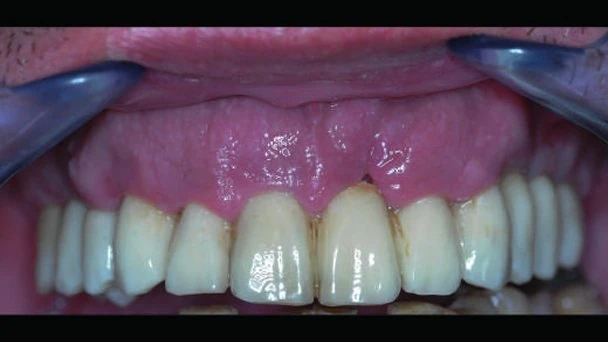
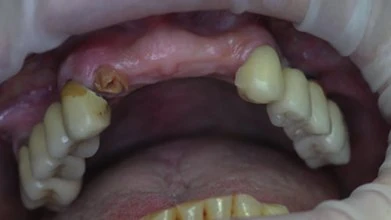
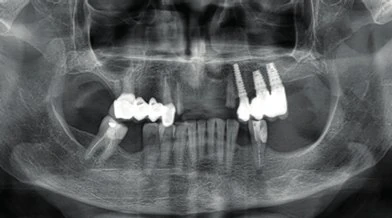
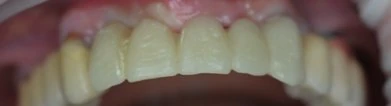
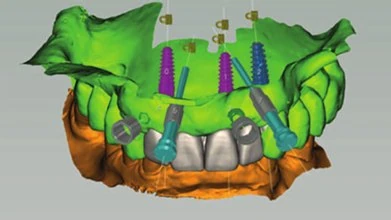
A 69-year-old woman in good general health presented with a severely compromised upper arch. Her clinical condition included multiple previous extractions, a residual denture damaged by extensive caries, several apical and periapical inflammatory processes, severe mobility of the remaining teeth, and a large area of palatal irritation caused by the removable prosthesis. Because of the resulting aesthetic and functional impairment, an implant-supported fixed rehabilitation was planned, with the upper arch treated as the first surgical phase.

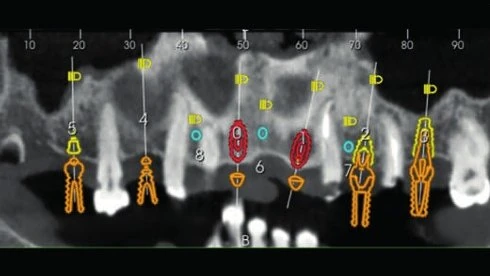
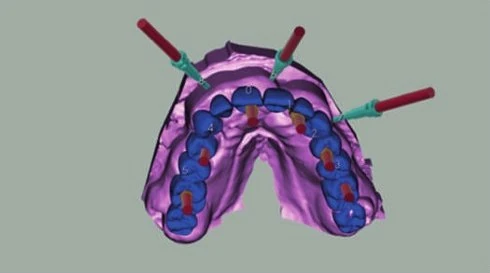
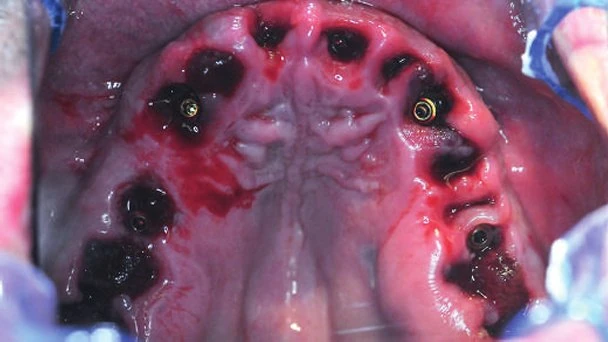
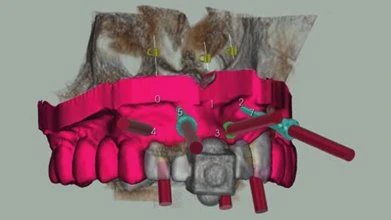
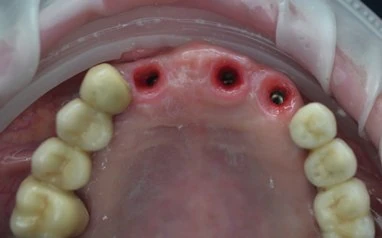
The digital workflow began by aligning the DICOM data with the STL files obtained from the intraoral scan. A diagnostic wax-up was imported into the guided-surgery software so that six implants could be planned according to the intended prosthetic result. The implant positions, dimensions, and prosthetic components were selected before surgery, and a preconstructed provisional restoration was incorporated into the treatment plan.

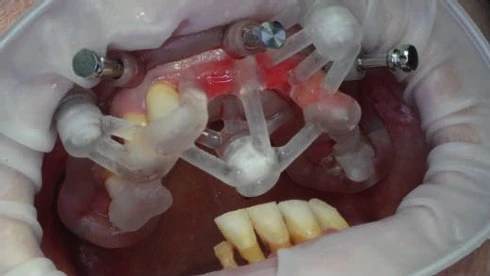
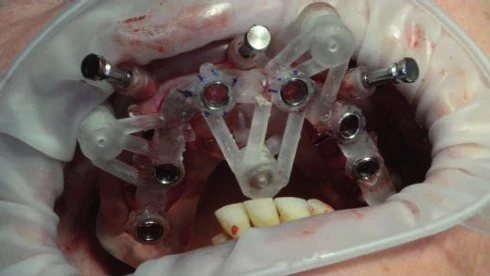
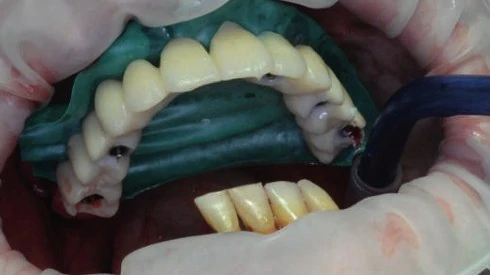
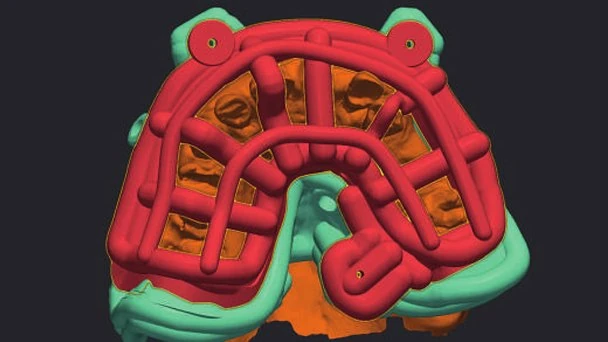
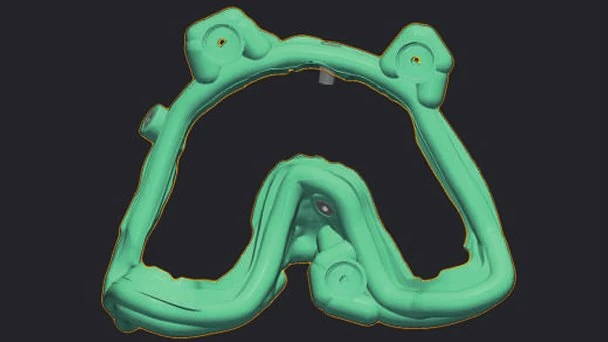
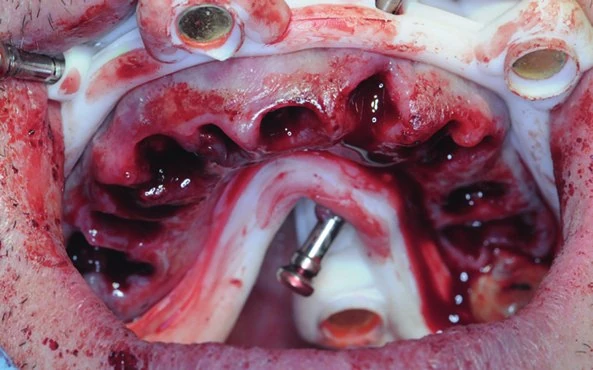
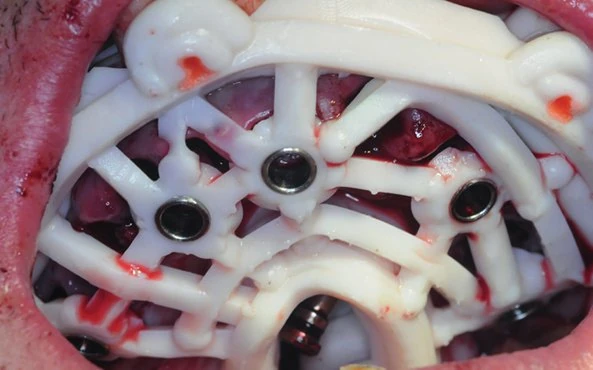
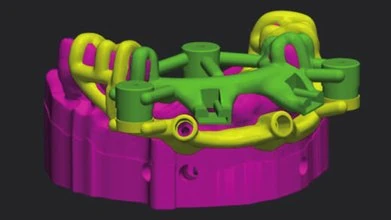
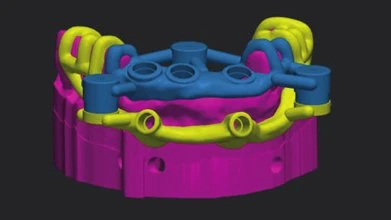
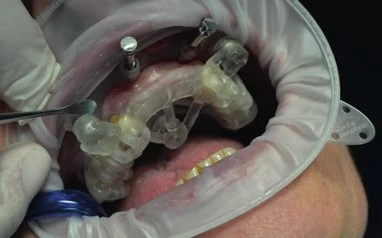
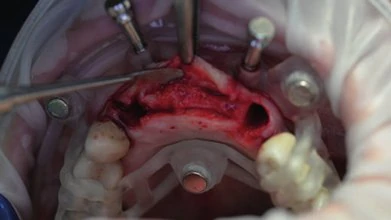
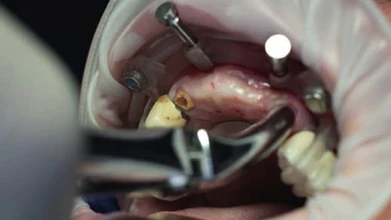
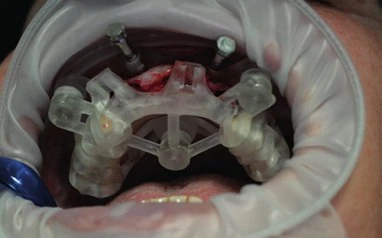
Using the SCULPT module, a sequence of predetermined templates was created for the extractions, limited osteoplasty, guided osteotomy preparation, implant insertion, and provisional restoration. A tooth-supported positioning guide established the location of an external base, which was stabilized with fixation pins and remained in place throughout the procedure. Magnetically coupled components were then exchanged in sequence while preserving the planned position. After guided implant placement and positioning of the prosthetic components, the prefabricated provisional restoration was connected at the end of the intervention.

This case demonstrates a complete digital and prosthetically driven workflow for full-arch immediate-load rehabilitation, from virtual planning and sequential guides to implant placement and delivery of the provisional restoration.

Figure 01 from the published case
Fig. 01
Figure 02 from the published case
Fig. 02
Figure 05 from the published case
Fig. 05
Figure 06 from the published case
Fig. 06
Figure 08 from the published case
Fig. 08
Figure 11 from the published case
Fig. 11
Figure 14 from the published case
Fig. 14
Figure 18 from the published case
Fig. 18
Figure 19 from the published case
Fig. 19
Case two · whose case this is

Dr. Michael Cerri

Published in the clinical literature. Future Guide neither planned nor performed this case, and claims no part of it.

Stackable Predetermined Guides for Immediate Post-Extraction Rehabilitation

This case presents the immediate-load rehabilitation of an entire post-extraction arch through a fully digital workflow. The clinical objective was to transfer the virtual plan accurately through the extraction, implant-placement, and provisional-restoration stages while maintaining a stable reference throughout treatment.

The predetermined-template concept used a bone-anchored base to reduce positional inaccuracy during implant insertion. Implant 3D Guide Design and the SCULPT module were used to create the separate portions of the guide system and to divide the temporary prosthesis into an aesthetic component and a supporting substructure. The resulting components could be used sequentially while maintaining the same planned reference position.

The patient received a screw-retained prosthesis on the same day. The clinical sessions lasted two hours in the morning and forty-five minutes in the afternoon. The case illustrates how preoperative digital design can support a predictable stackable workflow and shift a substantial part of the work from the surgical appointment to the planning stage.

Figure 05 from the published case
Fig. 05
Figure 09 from the published case
Fig. 09
Figure 12 from the published case
Fig. 12
Figure 13 from the published case
Fig. 13
Figure 15 from the published case
Fig. 15
Figure 18 from the published case
Fig. 18
Figure 19 from the published case
Fig. 19
Figure 23 from the published case
Fig. 23
Figure 25 from the published case
Fig. 25
Case three · whose case this is

Dr. Francescantonio Polito

Published in the clinical literature. Future Guide neither planned nor performed this case, and claims no part of it.

Selective Guided Crestal Osteoplasty with Immediate Implant Rehabilitation

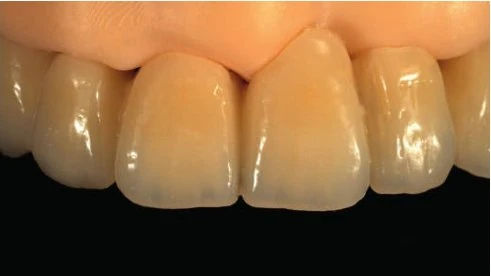
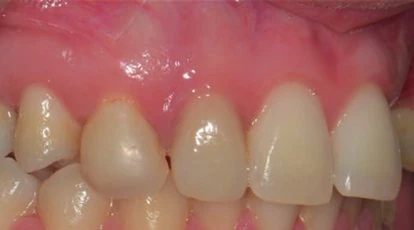
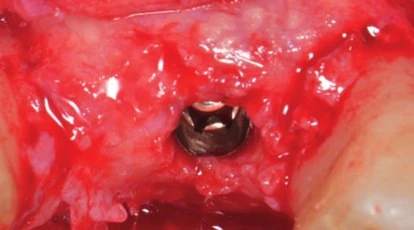
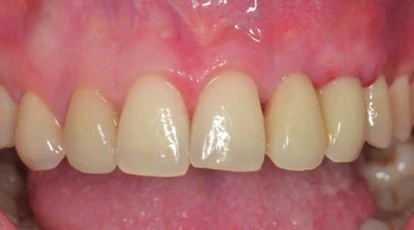
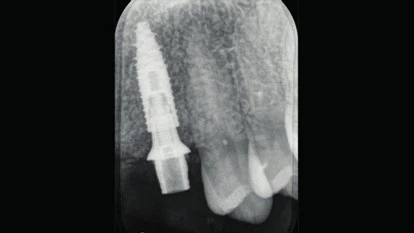
A 68-year-old woman required rehabilitation of the upper anterior region after losing a previously cemented prosthesis. The remaining root in position 12 and tooth 23 were severely compromised. The treatment plan included their extraction, post-extraction implants in positions 12 and 23, a third implant in position 21, and an immediately loaded provisional restoration.

The initial digital workflow used Implant 3D and the SCULPT module. Because extensive metal-ceramic restorations complicated the alignment of the CBCT and model scan, a custom radiological device was designed to provide reliable reference points. A diagnostic wax-up then established the prosthetically correct implant positions. During planning, the team identified bone peaks that required corrective osteoplasty to create a more suitable ridge form in this highly aesthetic area.

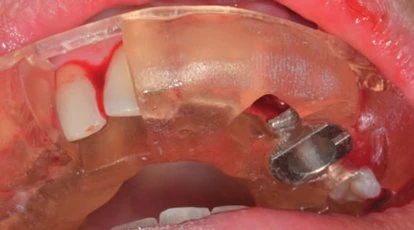
A dedicated bone-cutting guide was designed to make the reduction selective and controlled. Two virtual horizontal blade implants were positioned across the bone peaks to define the cutting paths and the corresponding piezoelectric bushings. A sequence of predetermined templates was then produced. A tooth-supported positioner established the external base, which was fixed with stabilization pins and remained in position throughout the procedure.

After the extractions and limited flap elevation, the bone-remodelling component guided the piezoelectric cutting action only over the planned peaks. A drilling template was then placed on the same stable base to guide osteotomy preparation and implant insertion. The prefabricated provisional restoration was connected in the planned position. At the later review, the book reports satisfactory hard- and soft-tissue integration and favourable tissue conditioning around the provisional restoration.

Figure 01 from the published case
Fig. 01
Figure 02 from the published case
Fig. 02
Figure 06 from the published case
Fig. 06
Figure 08 from the published case
Fig. 08
Figure 12 from the published case
Fig. 12
Figure 14 from the published case
Fig. 14
Figure 25 from the published case
Fig. 25
Figure 26 from the published case
Fig. 26
Figure 27 from the published case
Fig. 27
Figure 30 from the published case
Fig. 30
Figure 41 from the published case
Fig. 41
Figure 42 from the published case
Fig. 42
Case four · whose case this is

Dr. Nicola De Rosa

Published in the clinical literature. Future Guide neither planned nor performed this case, and claims no part of it.

Digitally Supported GBR Followed by Static Guided Implant Placement

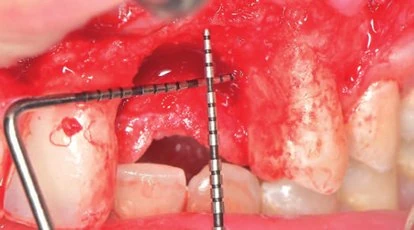
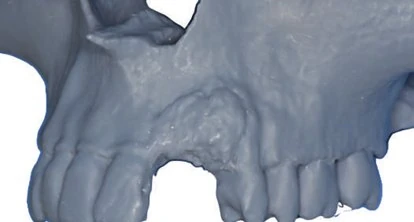
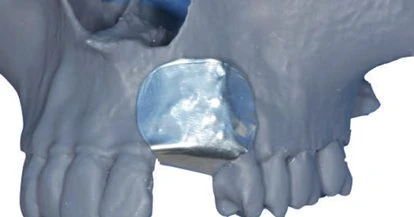
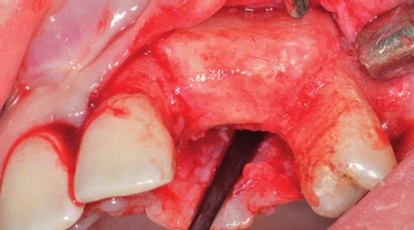
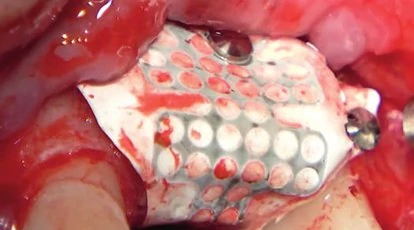
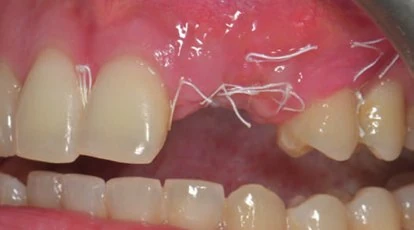
A healthy 22-year-old non-smoking patient presented with a marked tissue deficit in the 22-23 region. Surgical exposure revealed a bone deficiency of approximately 10 mm horizontally and 5 mm vertically. The treatment plan involved guided bone regeneration with a titanium-reinforced PTFE membrane, followed by implant placement and prosthetic rehabilitation.

Before the regenerative procedure, a stereolithographic model of the maxilla was produced from the CBCT data. An aluminium template was created on this model and used intraoperatively as a support for shaping the membrane, reducing chairside working time. The graft consisted of 70% autogenous bone harvested from the ramus and 30% animal-derived bone. The book reports tension-free closure and favourable early healing.

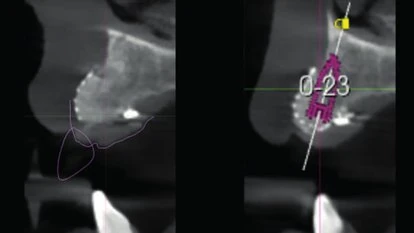
After five months of GBR healing, a new CBCT and an intraoral scan were obtained. Implant position 23 was planned in Implant 3D according to a virtual diagnostic wax-up, and a tooth-supported static surgical guide was designed. On reopening, the regenerated bone was described as being of good quality. Guided osteotomy preparation and implant insertion were completed, followed by soft-tissue management. A fixed immediate-load restoration for positions 22 and 23 was placed five hours after surgery.

Figure 01 from the published case
Fig. 01
Figure 04 from the published case
Fig. 04
Figure 05 from the published case
Fig. 05
Figure 07 from the published case
Fig. 07
Figure 10 from the published case
Fig. 10
Figure 11 from the published case
Fig. 11
Figure 14 from the published case
Fig. 14
Figure 16 from the published case
Fig. 16
Figure 17 from the published case
Fig. 17
Figure 21 from the published case
Fig. 21
Figure 24 from the published case
Fig. 24
Figure 25 from the published case
Fig. 25

Your case, planned the same way

Send the CBCT and the scan and we will tell you what the plan has to solve before anything is drilled.

Services

Guided surgery services

Two services, one workflow. You send imaging; a consultant reviews it and we return either a written plan or a plan and the guide that executes it.

01

Consultative Report

A radiographic assessment of your case, written by a clinician.

What you upload

A CBCT scan of the region of interest, plus your case notes. Export the study as DICOM and upload the whole folder compressed into a single ZIP — not a screenshot and not a PDF report.

What you receive

  • Radiographic assessment of the region
  • Bone volume and density evaluation
  • Recommended implant position and angulation
  • Notes on anatomical structures to avoid
Delivery3 working days
Rush option24 hours
Free revisions1
02

Report + Surgical Guide

The full plan, and the physical guide file that carries it into the mouth.

What you upload

A CBCT — exported as DICOM and zipped as one folder — and an intraoral scan of the same arch as STL, PLY or OBJ, plus your case notes. Both are required: a guide cannot be designed from the CBCT alone.

What you receive

  • Everything included in the Consultative Report
  • A print-ready surgical guide file
  • Sleeve specification and drilling sequence
  • A digital preview for your approval before finalisation
Delivery5 working days
Rush option24 hours
Free revisions1
Clinical scope

Cases we plan

From the single unit you place every week to the cases that need the most control — eight of them, and the plan is built the same way for all eight.

A tooth-supported surgical guide for a single unit: one drill sleeve over the gap and two windows that show the guide is fully seated on the teeth beside it
The case you see most weeks

Single Unit

One tooth missing between two healthy neighbours. The gap is narrow, the roots either side lean into it, and the crown that is coming decides the axis long before the drill does.

  • Angle and depth decided against the adjacent roots, not by eye
  • A tooth-supported guide that locates itself on the neighbours
  • Planned from the crown down, so the emergence is right
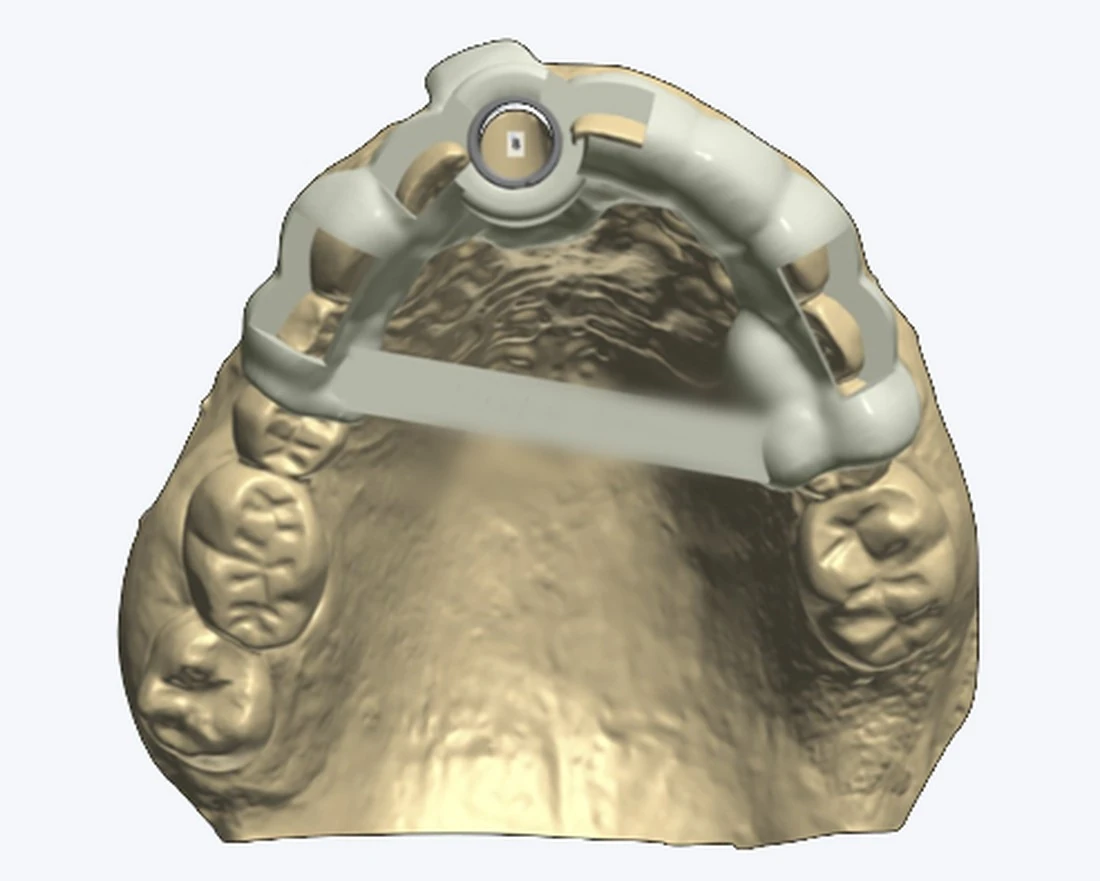
A surgical guide seated on the upper teeth that remain, carrying a single drill sleeve over the tooth being replaced, braced across the palate
Extraction and placement in one visit

Immediate Placement

The socket is the wrong guide. It points where the old root went, not where the new crown needs to be — and once the tooth is out there is nothing left in the mouth to measure against.

  • The axis is taken from the crown that is coming, not the socket that is leaving
  • Engagement planned in the wall that will actually hold it
  • Referenced to the teeth that remain, so the guide still seats after the extraction
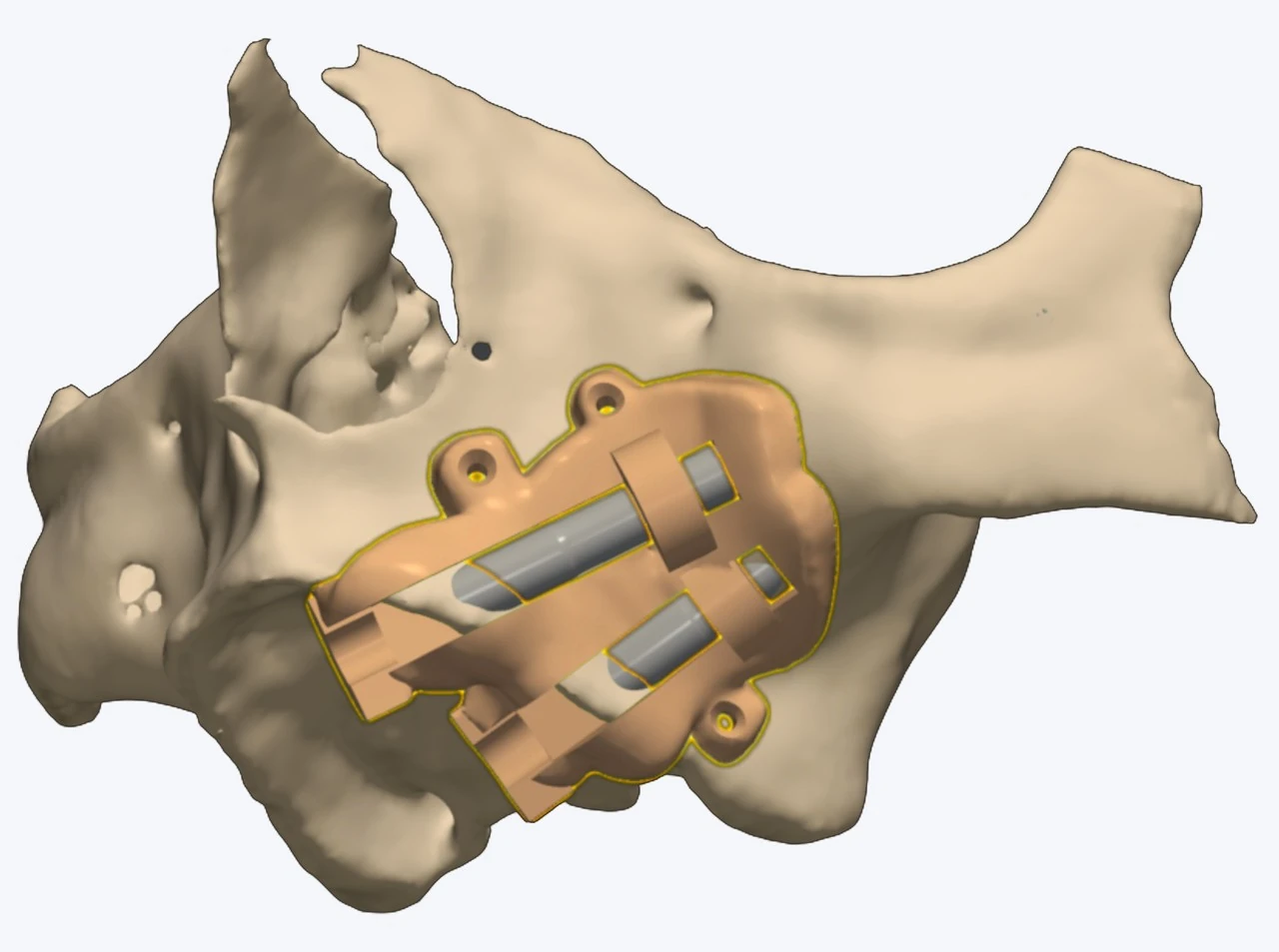
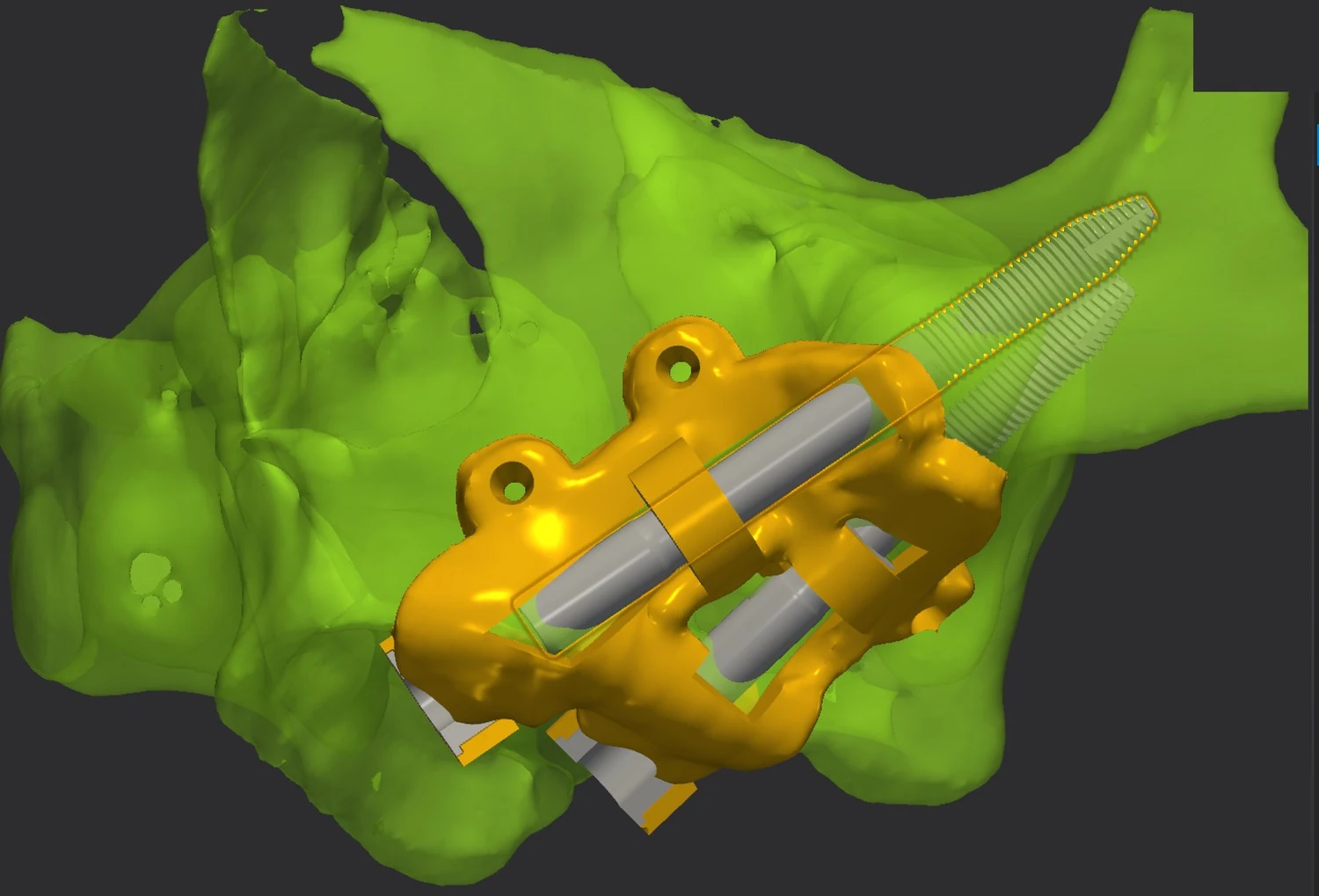
A zygomatic surgical guide seated on the segmented bone, its sleeves holding both trajectories towards the zygomatic body
The hardest case we plan

Fully Guided Zygomatic Implants

When the posterior maxilla has resorbed past anything a fixture can hold, the anchorage moves to the zygomatic body — and the axis that gets there is long, oblique, and passes close to the sinus and the orbit.

  • Both trajectories planned on the CBCT before anything is cut
  • Entry, angle and depth carried by the guide from crest to zygoma
  • Anterior fixtures placed in the bone that is still there, in the same plan
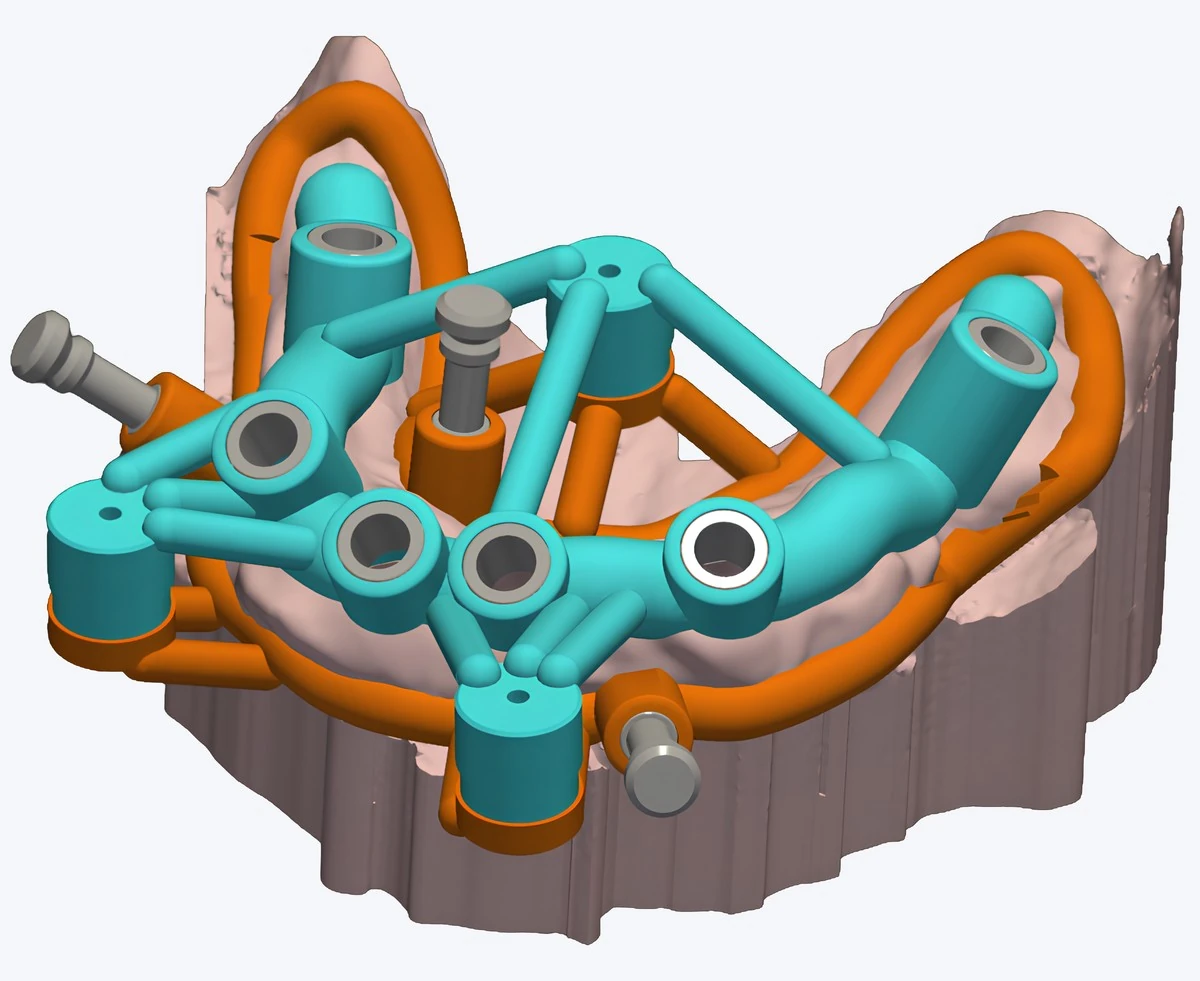
A patient-specific guide seated on the model, its sleeves and fixation pins holding the plan in place
When one guide is not enough

Stackable Guide

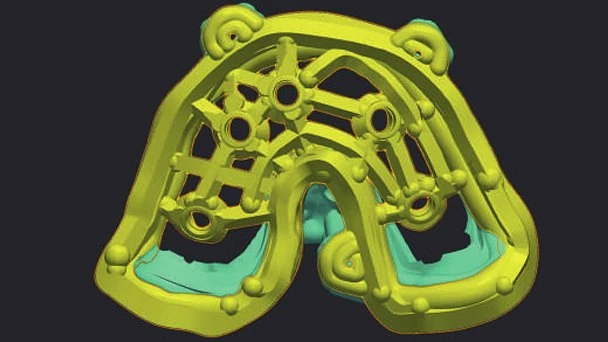
A base seated and pinned once, and every guide after it stacks onto that base — reduction, then drilling, then placement. Each stage inherits the position the one before it was planned in, instead of being found again by hand after the ridge has changed shape.

  • One base, pinned to the bone, carrying every later guide
  • Bone reduction and osteotomy share one reference, not two
  • The plan survives the moment the landmarks it was drawn on are cut away
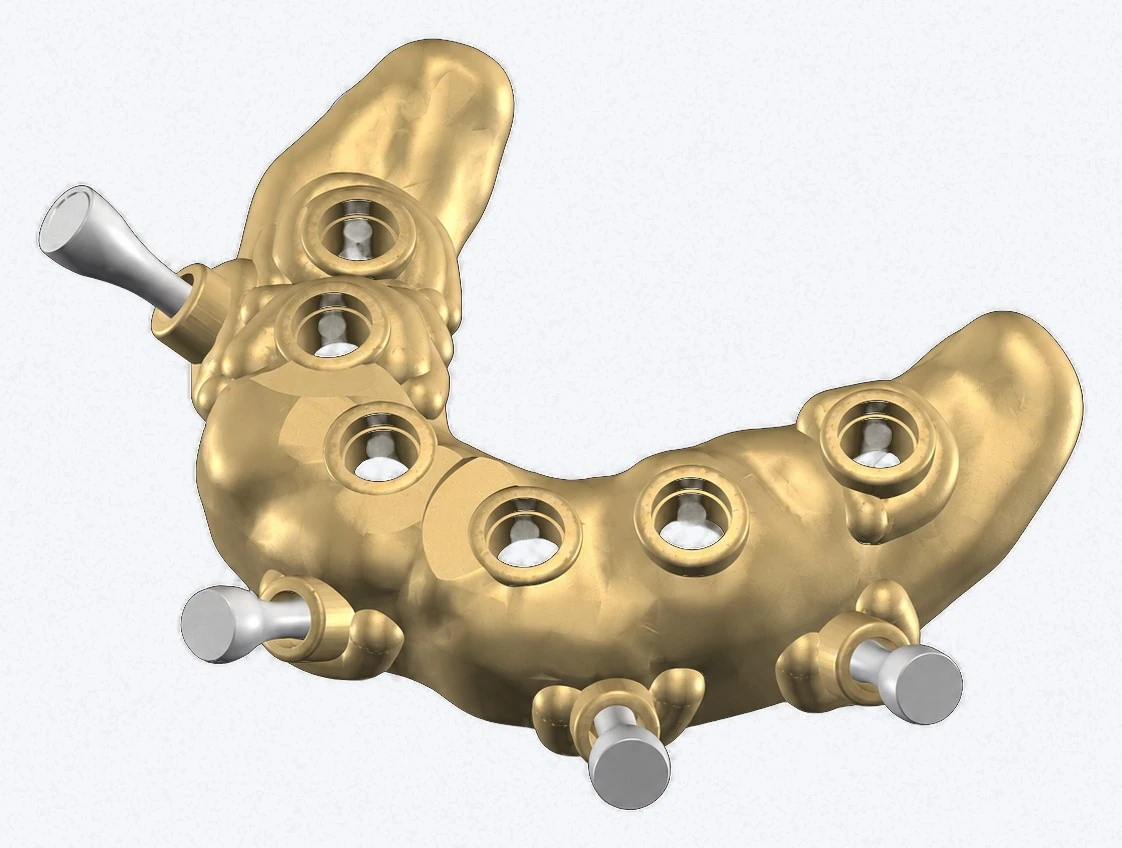
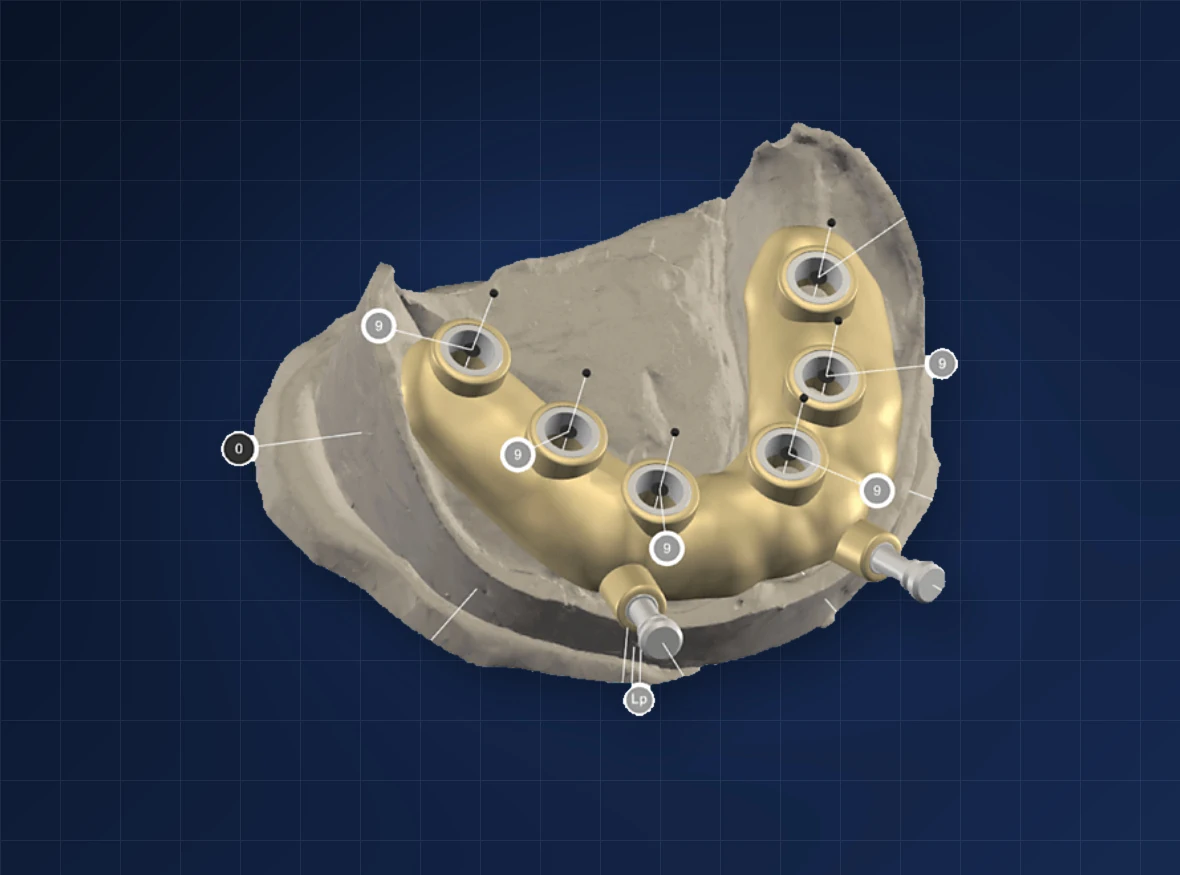
A screw-retained full-arch framework on its multi-unit abutments, seen from above
The case we plan most

Full Arch

Four to six fixtures carrying one prosthesis. The bar is decided first and the fixtures are placed to reach it — which is what prosthetically driven planning means, and why the posterior pair is tilted rather than dropped into whatever bone is under it.

  • Posterior fixtures tilted away from the sinus and the mental loop
  • Abutment height and angle chosen per fixture, not after the fact
  • One guide carries all of it — entry, angle, depth
Also planned here

Three more case types

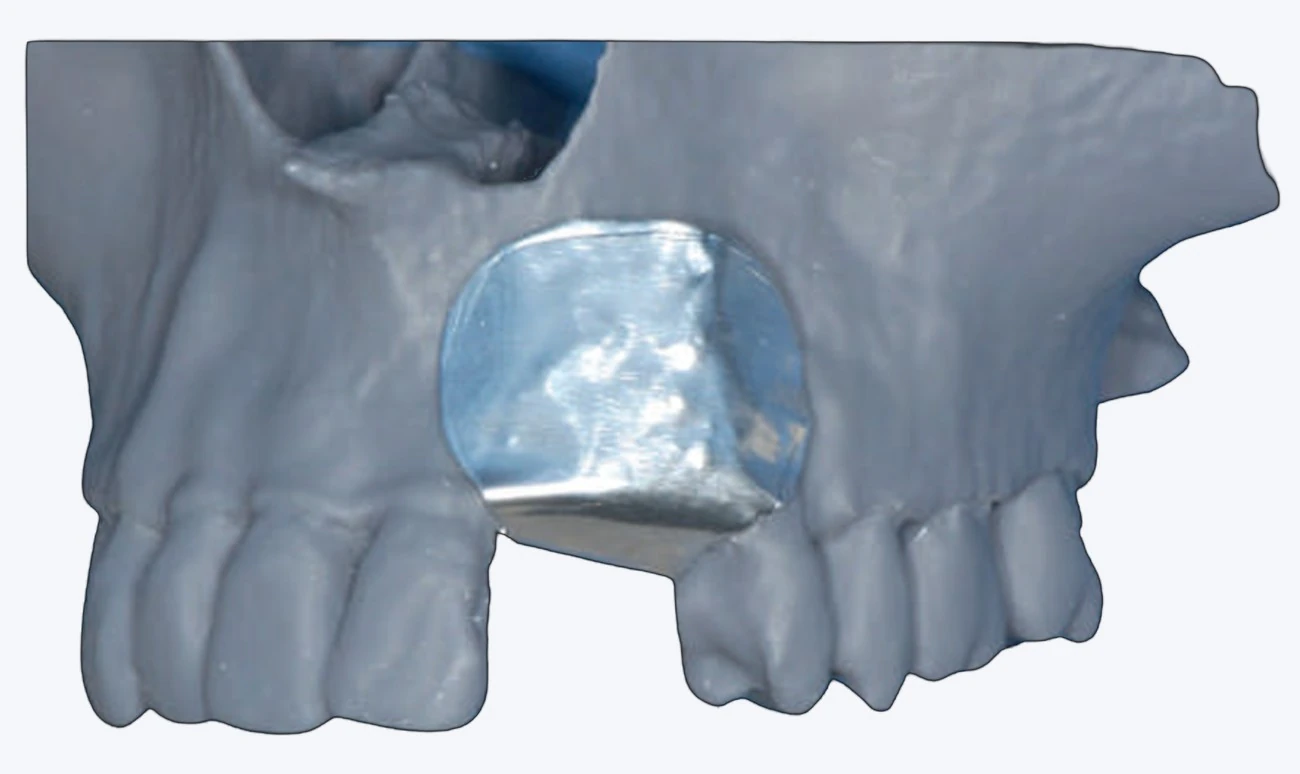
A shaped bone graft seated against the maxilla in the position the planned fixtures need
When the ridge has to be rebuilt first

Guided Bone Regeneration

The block is designed from the CBCT to sit where the fixtures are going, and it is placed and fixed in that position instead of being trimmed to fit by hand at the chair.

  • Designed to the planned fixture positions
  • Fixation screws planned clear of the roots and the nerve
  • The implant plan comes back with the graft
See a published case→ Send a regeneration case Ask about a regeneration case→
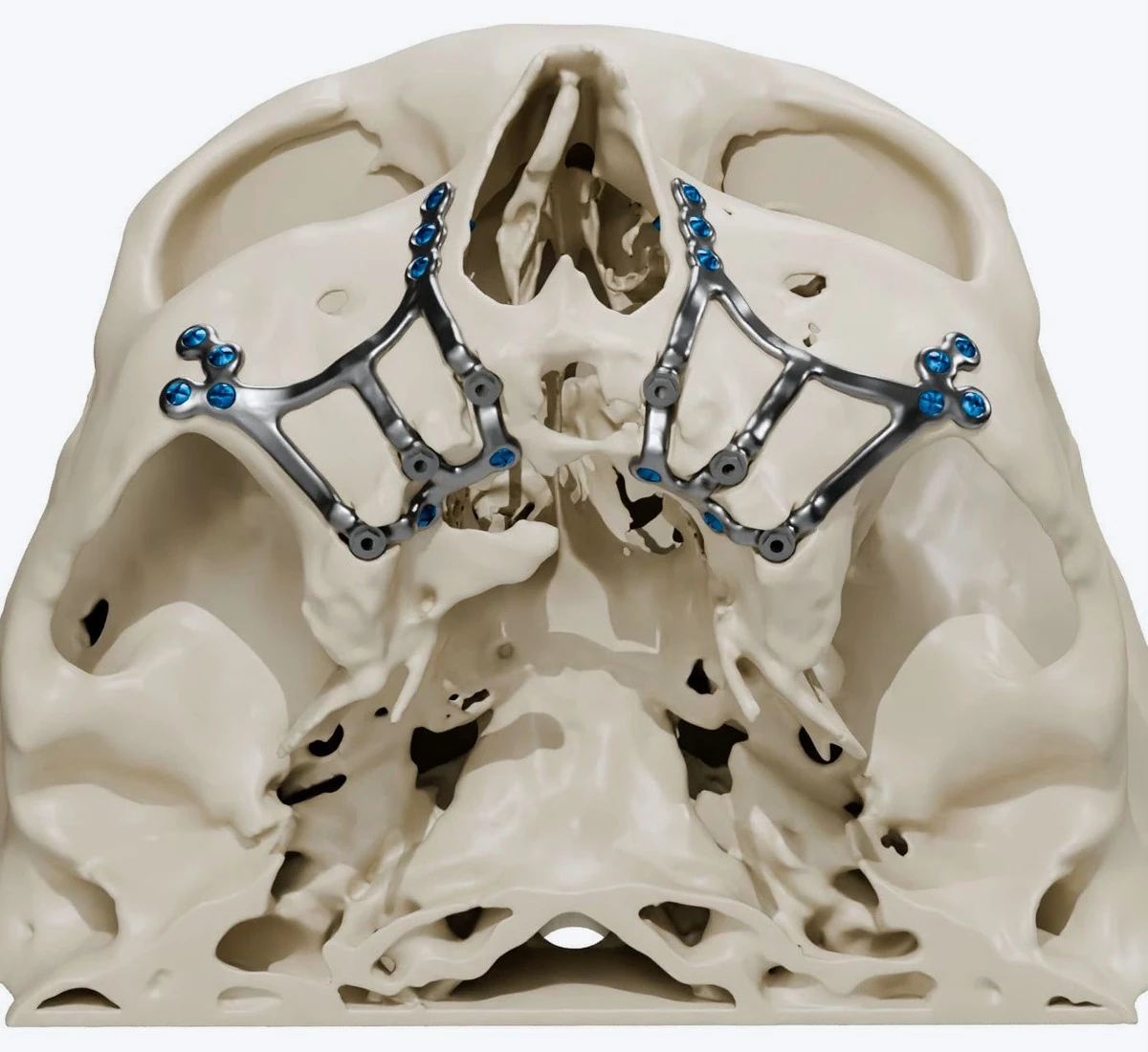
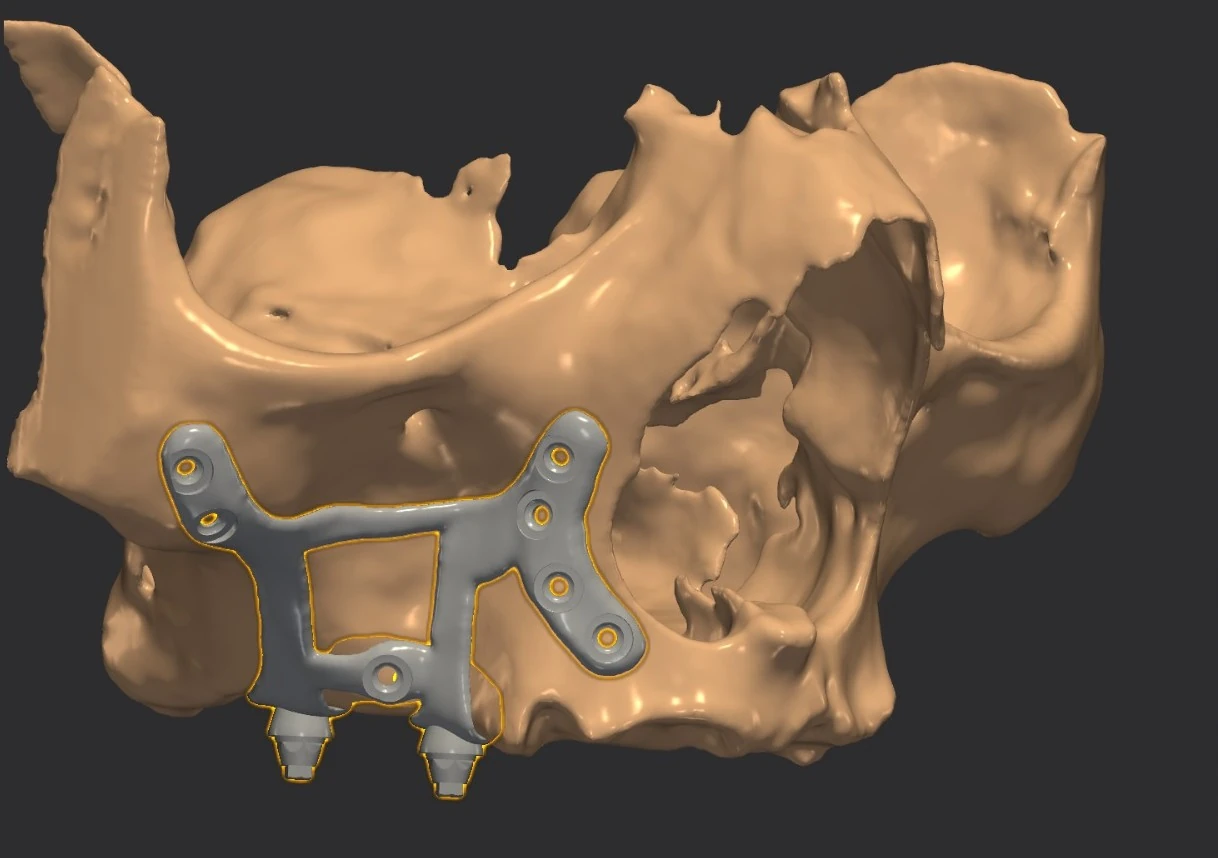
Patient-specific titanium subperiosteal frameworks fixed with screws to both sides of the midface
When there is no ridge left

Subperiosteal Implants

A framework designed for one patient from that patient's CBCT, fixed to the bone that remains and carrying the abutments itself. Nothing goes inside the ridge, because there is no ridge to go into.

  • One framework, one patient
  • Fixation points chosen where bone still exists
  • Abutment positions decided with the prosthesis
See a sample case→ Send a subperiosteal case Ask about a subperiosteal case→
A printed reduction guide, its rails setting the crestal level the prosthesis was planned to sit at
Before anything is drilled

Guided Bone Reduction

The crestal level is decided on the plan, where the prosthesis and the bone can be seen together, and a reduction guide cuts to it — so the ridge is brought to the plan rather than the plan re-judged against the ridge.

  • The cut plane comes from the prosthetic plan
  • Pins hold the reference after the landmarks go
  • The drilling guide seats on the same base
See a published case→ Send a reduction case Ask about a reduction case→
Who receives your case

Every case that arrives goes to one person, not a queue. He opens your files before the clock starts, tells you the same day if something cannot be planned from, and stays with the case on WhatsApp until the plan is back with you.

Not sure which service your case needs?

Send us the case details on WhatsApp and we will tell you which one it needs.

How it works

From upload to printed guide

Every case moves through the same seven stages. You can see which stage yours is at, at any time, from your dashboard.

The seven stages of a case

  1. 01

    Subscription check

    A case is sent on an active subscription

  2. 02

    Received

    Files pass a completeness check — the delivery clock starts here

  3. 03

    Missing files

    Only if a file is unusable. The clock pauses, at no extra cost

  4. 04

    Under review

    A consultant reads the CBCT — bone, anatomy, prosthetic position

  5. 05

    In design

    For guide orders: sleeves, drilling sequence, support and retention

  6. 06

    Ready

    Report and guide file in your dashboard, and an email when they are ready. Download them, or ask for your free revision from My cases

  7. 07

    Approved / Closed

    You receive the files. 24 hours after delivery the case is deleted

Before you start

What we need from you

  • A CBCT scan covering the full region of interest
  • An STL intraoral scan — required only for a surgical guide
  • Patient name, age, gender and relevant medical history
  • Number of implants, implant system, surgical kit and guide type
  • Confirmation that the patient consented to the upload
  • Your approval of the plan before we finalise it — we send it to you for confirmation and wait
Accepted formatsZIP (DICOM) · STL · PLY · OBJ
Maximum size1 GB per case, uploaded here
Report delivery3 working days
Guide delivery5 working days
Rush service24 hours
Free revisions1
Files kept on the site24 hours after delivery
Files & privacy

How we handle patient data

You are uploading real patient imaging, and that carries obligations for both of us.

  • Every submission requires you to confirm you obtained the patient's consent.
  • Only you and our team, signed in, can open your case — and every download is recorded.
  • Everything is deleted 24 hours after the case is delivered — the imaging you sent and the files we produced. Download them the same day.

The report is consultative and the guide is a planning aid. Final clinical responsibility rests with the treating dentist.

Guided surgery

From your scan to a guide you can print

A consultant reads your CBCT, plans the implants, and designs the guide. You approve it, then print it on the printer in your own clinic.

No software to buy, and none to learn. We plan in Implant 3D — the Italian planning software we distribute across the region.

A printed surgical guide seated on an arch model, with the drill sleeves in place Guide produced with Implant 3D · Media Lab S.p.A.
  1. 01

    Submit your case

    CBCT, intraoral scan and the case details — checked and uploaded here, to a private store only you and our team can open.

  2. 02

    Digital analysis

    Bone volume and density read, the nerve canal traced, the anatomical limits marked.

  3. 03

    Implant planning

    Position, angle, diameter and length decided by what the prosthesis needs.

  4. 04

    Guide design

    Sleeves, drilling sequence, support and retention — built for your implant system.

  5. 05

    You approve, then print

    Nothing is finalised before you agree with it. Then the STL is yours.

The planning software

Your case is planned in Implant 3D — the Italian software behind guided surgery

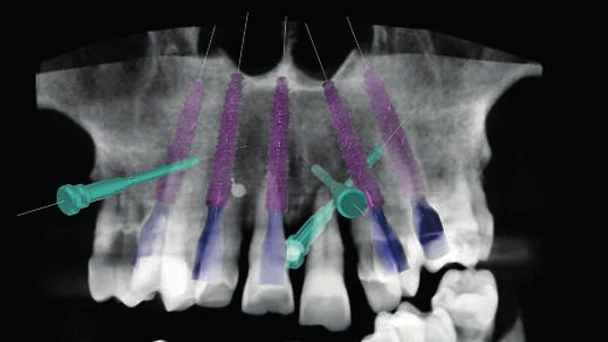
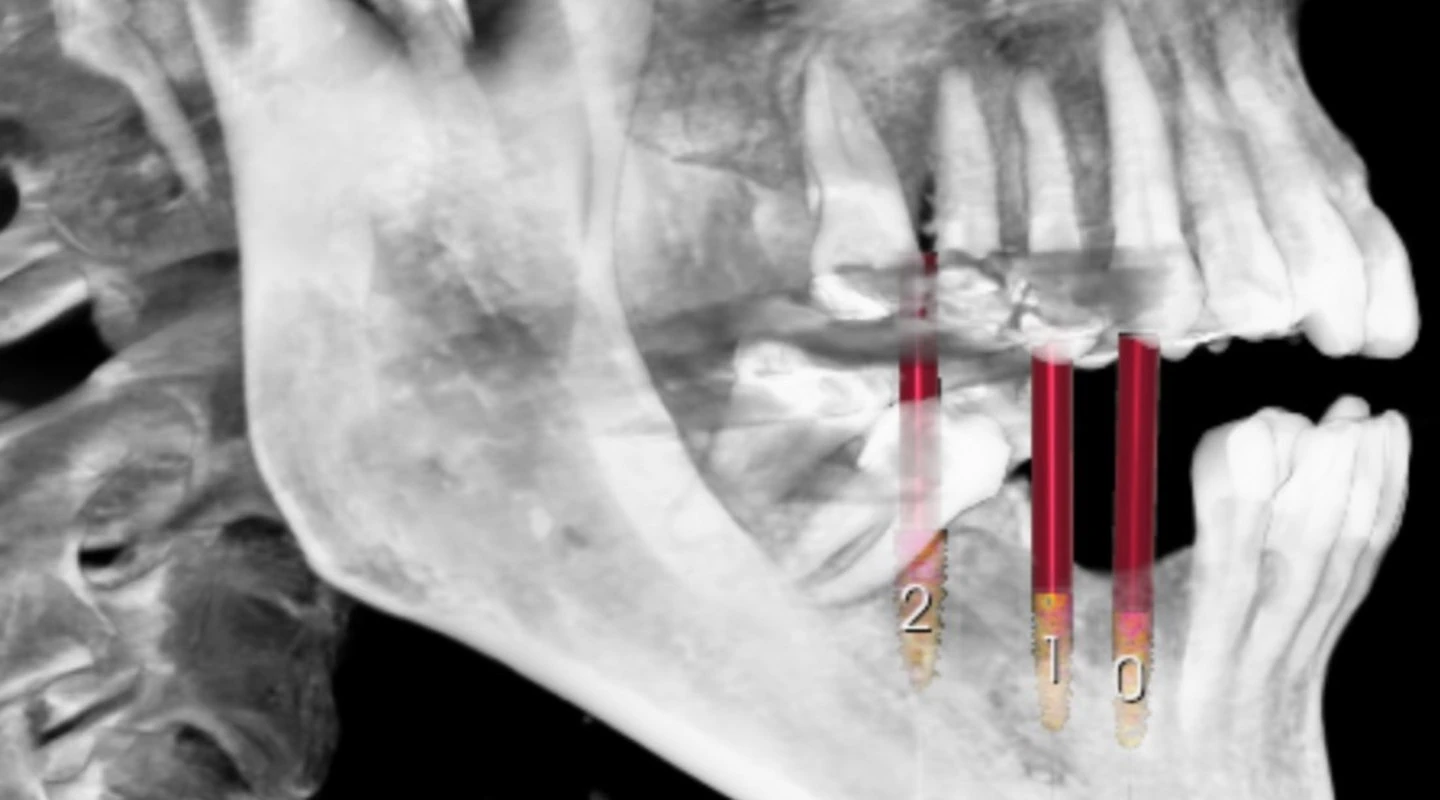
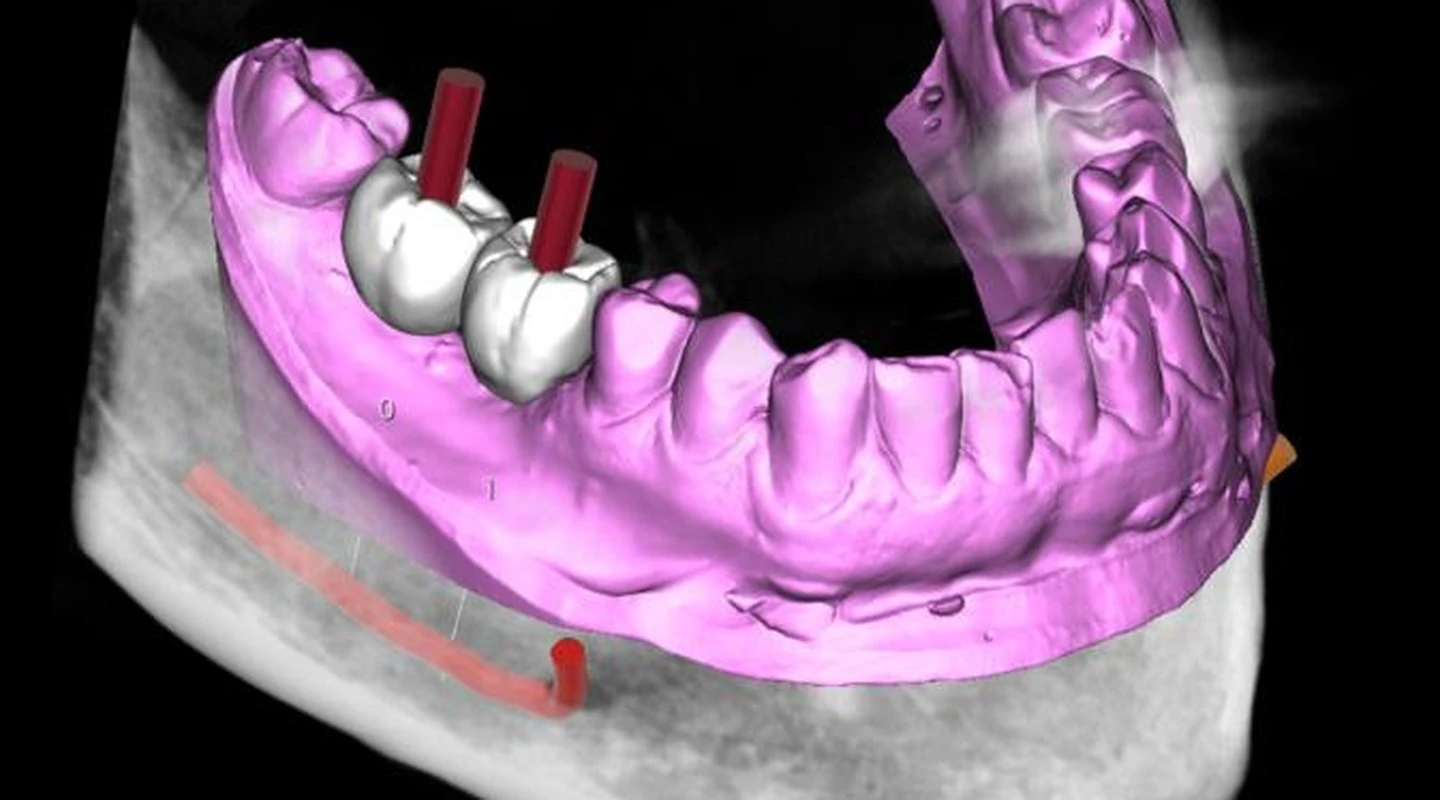
The implant positions, the sleeve heights and the guide itself all come out of one file. Nothing is drawn twice, so nothing can disagree with anything else.

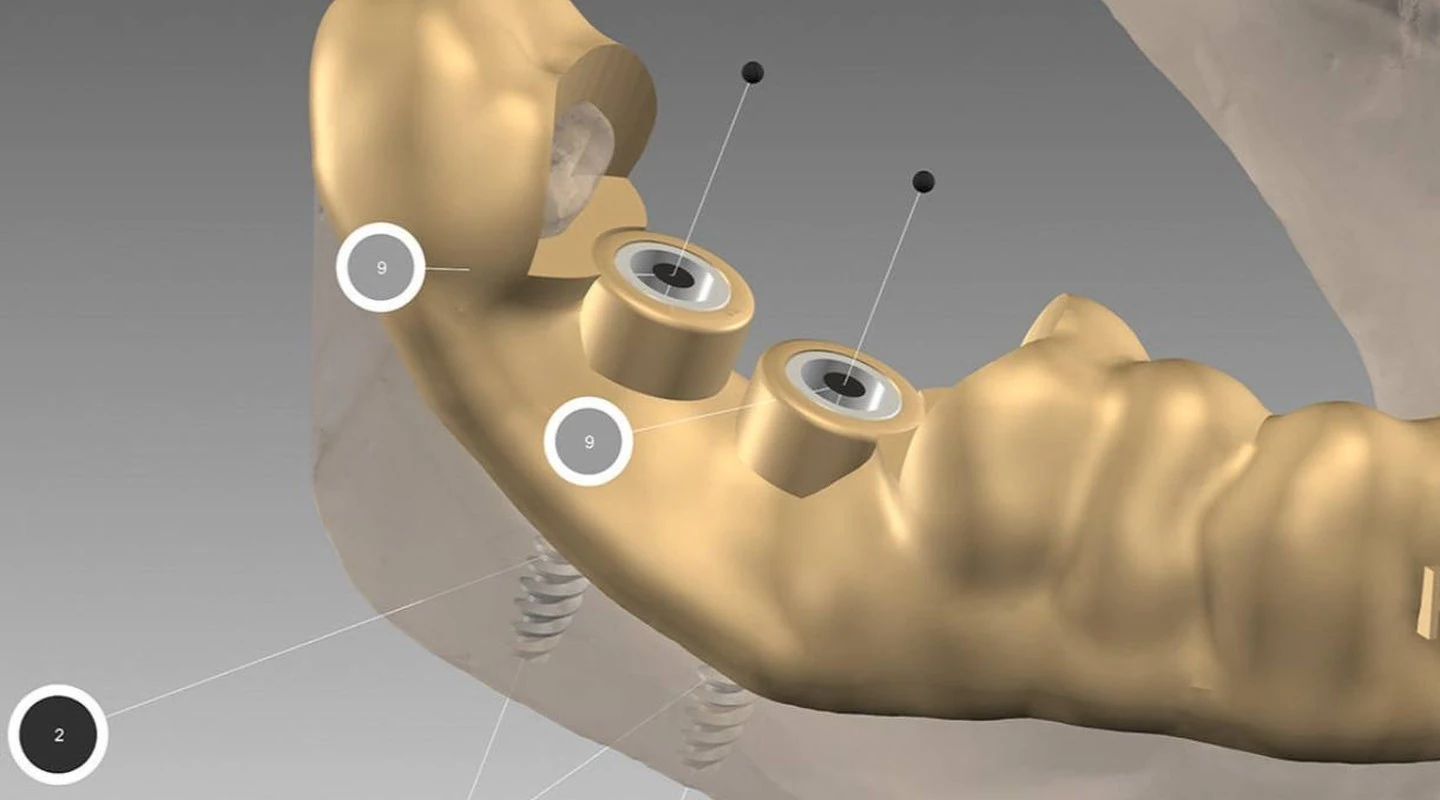
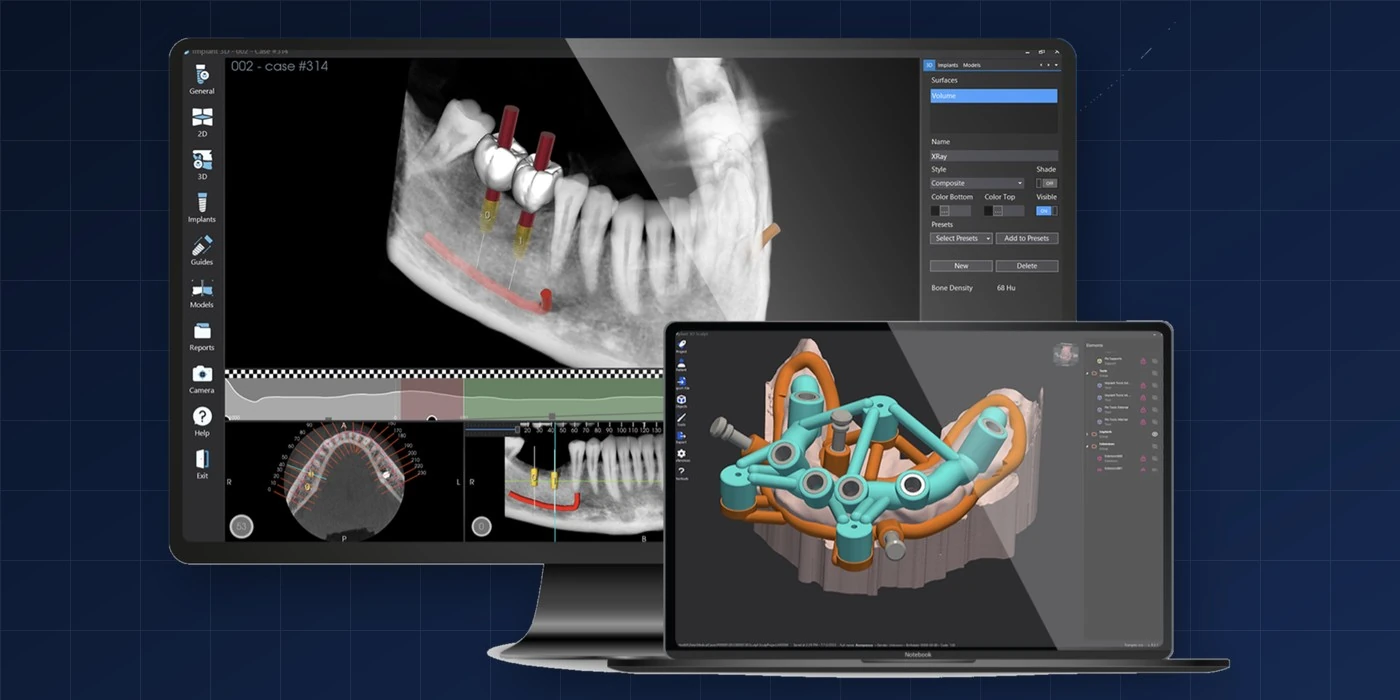
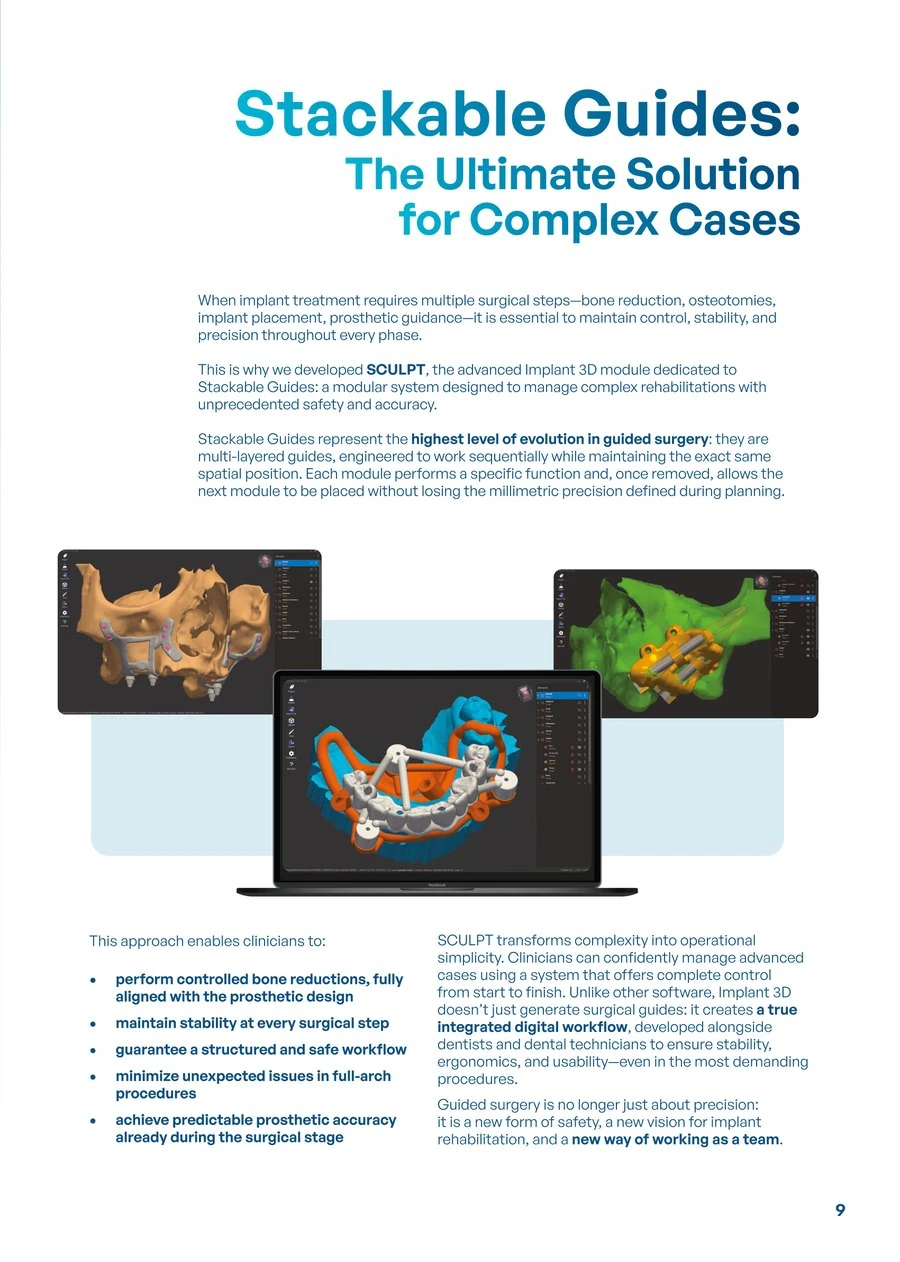
Implant 3D planning software — a CBCT with implants placed, and a stackable guide in Implant 3D Sculpt
Implant 3D and Implant 3D Sculpt are products of Media Lab S.p.A., Italy. Future Guide is their distributor in the Middle East. Software images courtesy of Media Lab S.p.A.

Ready to send a case?

We confirm receipt the same working day.

Contact

Talk to us

We answer every day from 08:00 to 22:00 Baghdad time, and reply to written enquiries within 24 hours.
Send a message

Tell us what you need

Choose a subject so your message reaches the right person straight away.

Commercial Registration1508999
Health Licence1508999

What happens after you write

  1. We read it the same day, between 08:00 and 22:00, and reply within 24 hours at the latest.
  2. If it is a case, we tell you which service it needs — a report, or a report with a surgical guide — before you pay anything.
  3. You send the case through the case portal, not through this form.
  4. Work starts once the subscription is confirmed active. Delivery is 3 working days for a report and 5 for a guide.

Have this ready and we can answer in one message

  • How many implants, and which arch
  • The implant system and surgical kit you use
  • Whether you already have a CBCT, and how old it is
  • Your country — it sets how you pay

Please do not attach patient imaging to an e-mail or a chat message. Imaging belongs in the case portal, where it is handled under the privacy policy.

Do not include patient imaging in this form — prepare it in the case portal instead.

Partnership

We are looking for distributors

We hold exclusive Middle East distribution for IML Swiss Dental Implants and RESISTA, and we are appointing country partners now.

The opportunity

Two European systems, one region

Implant systems from Switzerland and Italy, paired with a guided-surgery service that gives dentists a reason to choose them over what they already use.

What we provide

  • Exclusive territory rights for your market
  • Product training for you and your sales team
  • Access to the guided-surgery service for your clients
  • Marketing material in Arabic and English
  • Clinical support from our consultant team
Requirements

Who we are looking for

  • A registered company in the dental or medical supply sector
  • An existing sales relationship with dentists in your market
  • Capacity to hold stock and provide local after-sales support
  • Commitment to a minimum annual volume, agreed per territory

Applications are reviewed individually. We appoint one partner per territory.

Questions before you apply?

Speak to us directly — we will tell you honestly whether your territory is still open.

Case submission

Submit a case

Not saved — finish in one sitting

Which service do you need?

Both start with a CBCT. Choose a guide if position, depth and angulation must be reproduced exactly.

No consultation to book There is no call and no appointment before you start. The consultant’s opinion is part of the case itself — send the case and it comes back with the plan.

Monthly
One subscription, not a bill per case Any number of cases in the month, any scope, any additional planning. The only extra is a rush case.
How the subscription works→
After you send

From upload to printed guide

01

What you send

Upload your CBCT — and an intraoral scan if you need a guide — with your case notes, right here. ZIP (DICOM) · STL · PLY · OBJ, up to 1 GB. Scan requirements

02

Consultant review

A clinician reviews the anatomy, available bone and the planned implant positions.

03

Design & approval

We design the guide and send it for your approval. One free revision is included.

04

Download & print

Download the print-ready file and produce the guide at your lab or printer. Files are deleted 24 hours after delivery — download them the same day.

Doctor dashboard

Preview only — not a secure area. Sample data, no real login — anyone who opens this file can view it. Do not place patient data, CBCT files or private pricing behind it until the backend is built.

My cases

Sorted by delivery date — the most urgent first.

Case Patient Service Submitted Due Status

Team console

Preview only — not a secure area. Sample data, no real login — anyone who opens this file can view it. Do not place patient data, CBCT files or private pricing behind it until the backend is built.

Doctor accounts

Registration is open to everyone — activation is your decision. A licence number is optional.

Subscription

One subscription. No invoice per case.

You subscribe by the month or by the year and send cases. Nothing is charged case by case — the only extra is a rush case, and that is a separate fee added to your subscription.

Step one · free Free licence for 30 days Get your free licence of the guided-surgery software and use it for a full month. Training is free, and stays free.
Monthly $69 Unlimited cases — from a single-unit implant to full-arch cases and stackable guides. Free training included.
Yearly · best value $699 The same unlimited cases and the same free training, paid once a year — $129 less than twelve monthly payments.
Rush case $50 Delivery in 24 hours instead of the standard time. Charged per case, on top of the subscription.

In US dollars. The 30-day licence is for the planning software; the subscription is for the planning service.
What the subscription includes
Free licence30 days
TrainingFree
Charged per caseNothing
Cases per monthUnlimited
Case scopeSingle unit to full arch
Stackable guidesIncluded
Additional planningIncluded
Free revisions1
Rush — 24 hours$50
Each extra revision on a case$10
Files kept on the site24 hours after delivery
Delivery3–5 working days
VATNot applied

Want the details before you decide?

The figures are above. Message us about the free licence, the case types you work on, or anything the subscription does not cover.

Products & distribution

Exclusive Middle East distributor

We hold regional distribution rights for two European implant systems and the Italian planning software behind guided surgery — and we plan the cases that use them.

Switzerland

IML Swiss Dental Implants

A Swiss-manufactured implant system distributed by Future Guide across the Middle East. Every case we plan can be executed on IML components, with the guide designed around the exact drilling protocol of the system you are using.

Implant line

  • Diameters and lengths on request
  • Surface treatment per manufacturer spec
  • Sterile individual packaging

Prosthetic components

  • Abutments and healing caps
  • Impression and scan bodies
  • Screws and analogues

Surgical kit

  • Guided drilling sequence
  • Sleeves compatible with our guides
  • Torque and ratchet instruments

Catalogues

Both are the manufacturer’s own, in English. Open one in the browser or save it — nothing is asked of you first.

IML Universe

IML Universe

The full system catalogue

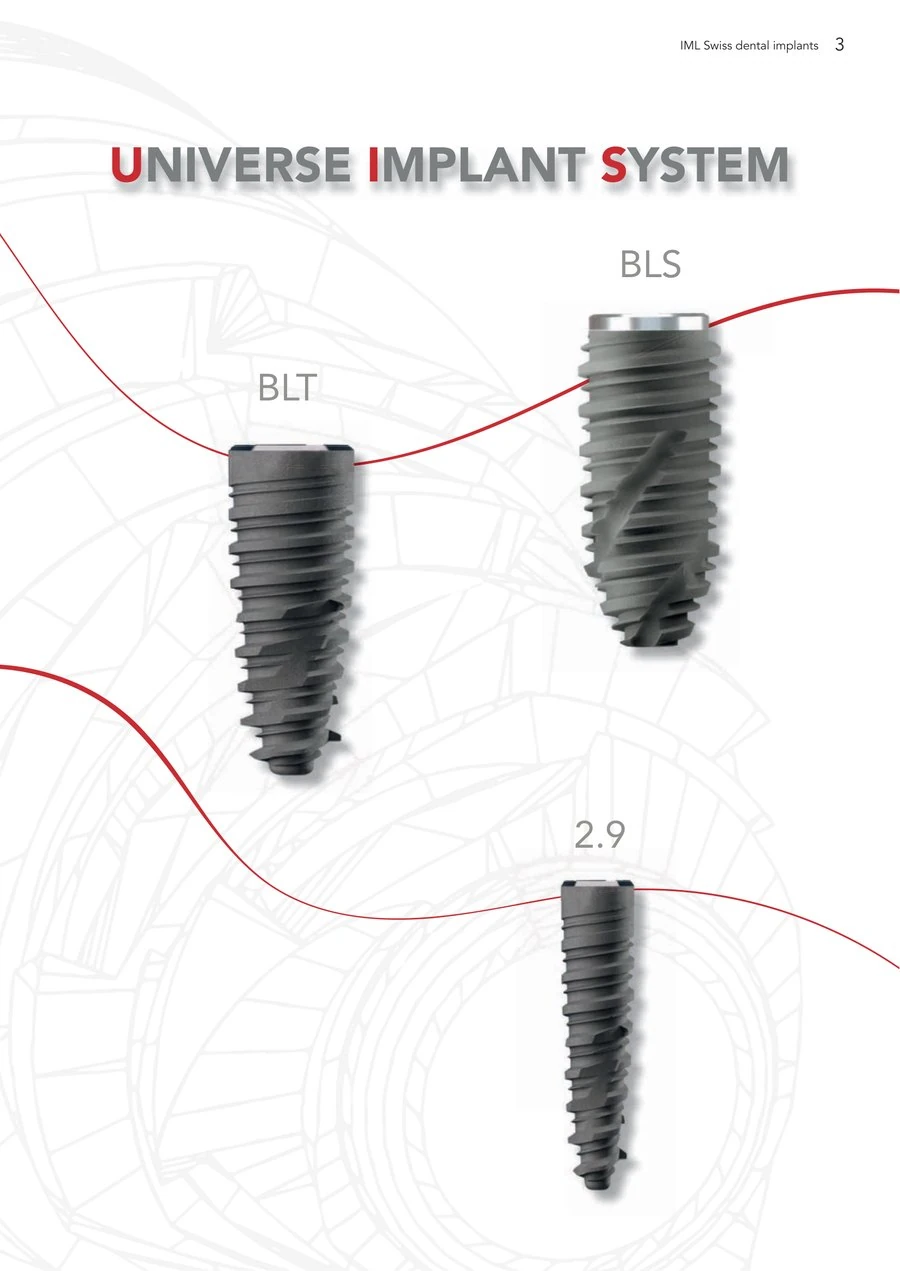
The implant lines end to end — BLT, BLS and the 2.9 — with the prosthetic components, the surgical kits and the drilling protocols for guided surgery.

PDF · 196 pages · 5.2 MB Open the catalogue Save↓
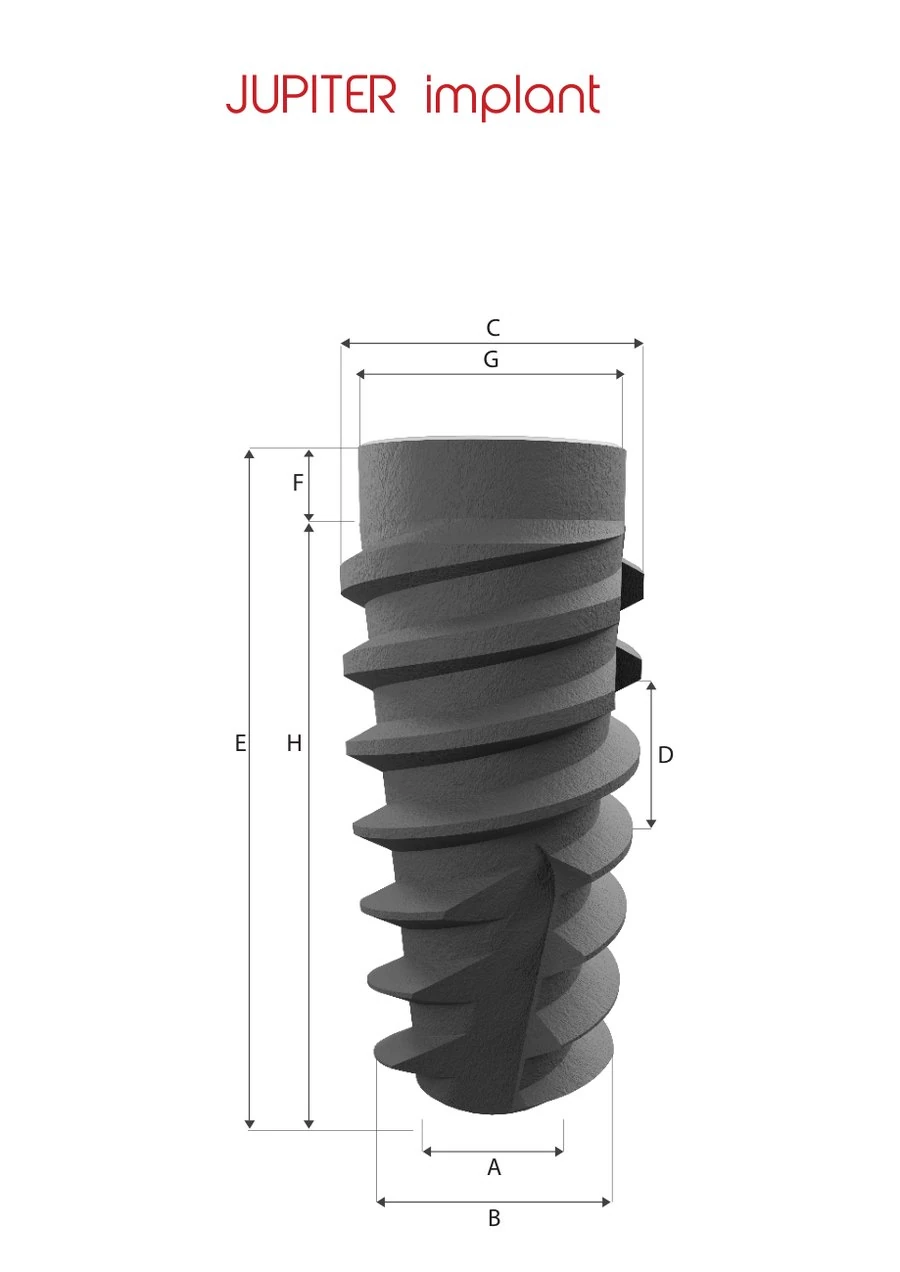
IML Jupiter

IML Jupiter

One platform, one prosthetic size

The Jupiter system on its own: a single RP connection, the surgical protocol, the CAD-CAM and M.U.A. workflows, and the lab components that go with them.

PDF · 17 spreads · 2.2 MB Open the catalogue Save↓

Published by IML Swiss Dental Implants. Future Guide is their Middle East distributor; we host the files, we did not write them.
Order Now Request a quote→ Diameters, lengths and reference codes are all in the catalogues above. Ask us about availability in your country.
Italy

RESISTA

An Italian implant system available through Future Guide in the region. Guides are designed to the system’s own surgical protocol, so the plan you approve is the plan you can actually execute chairside.

Implant line

  • Diameters and lengths on request
  • Manufacturer surface specification
  • Sterile individual packaging

Prosthetic components

  • Abutments and healing caps
  • Impression and scan bodies
  • Screws and analogues

Surgical kit

  • Guided drilling sequence
  • Sleeve system for guided placement
  • Torque and ratchet instruments

Catalogue

RESISTA’s own full catalogue, in Italian and English. Open it in the browser or save it — nothing is asked of you first.

RESISTA

RESISTA

Smart Surgery — the full range

Every connection RESISTA makes — internal hexagon, internal Morse, external hexagon and the 12° conical Platinum lines — with the prosthetics, the surgical kits, the drills and the guided-surgery instruments for each.

PDF · 274 pages · 15.7 MB Open the catalogue Save↓

Published by RESISTA — Ing. Carlo Alberto Issoglio & C. S.r.l., Italy. Future Guide is their Middle East distributor; we host the file, we did not write it.

Order Now Request a quote→ Diameters, lengths and reference codes are all in the catalogues above. Ask us about availability in your country.
ItalyPlanning software

Implant 3D

Italian planning software that turns a CBCT into a three-dimensional implant simulation on your own computer, then exports the surgical guide as an STL ready for any 3D printer. It is an open system compatible with more than 150 implant manufacturers, so it works with the system you already place.

Planning and diagnostics

  • Implant simulation on 2D and 3D models
  • Mandibular nerve identification
  • Panoramic views and bone sections
  • Bone density calculation

Guide design and export

  • Mucosa, tooth or bone supported protocols
  • Guide margin and sleeve selection
  • STL export for any 3D printer
  • Inspection holes, labels, drilled model export

AI segmentation and the Sculpt module

  • AI segmentation of teeth, jaws, sinuses and canals
  • Stackable guides for bone reduction
  • Zygomatic implant workflows
  • Unlimited STL export

Catalogue

Media Lab’s own documents, in English — the full 2026 catalogue and the shorter brochure. Open either in the browser or save it; nothing is asked of you first.

Implant 3D — 2026 catalogue

Implant 3D — 2026 catalogue

The full document

Seventeen pages: the planning workflow, surgical guide design, the Sculpt module for stackable guides, the Jarvis AI that traces the canal and segments the bone, WeShare, and the Universal Surgical Kit with its complete component list.

PDF · 17 pages · 4.6 MB Open the catalogue Save↓
Implant 3D — brochure

Implant 3D — brochure

The short read

Five pages on what the software does: the planning view, the guide it exports, the Jarvis AI bone segmentation, and the Sculpt module that builds stackable guides.

PDF · 5 pages · 0.4 MB Open the catalogue Save↓

Published by Media Lab S.p.A., Italy. Future Guide is their Middle East distributor; we host the file, we did not write it.

Free trial

Try Implant 3D free for one month

A licence on your own computer, on your own cases. We install it with you and stay on the line through the first plan — so the question you answer in that month is whether it fits the way you work, not whether you can get it running.

Start with a case you have already treated

You already know how it ended. That way you are judging the plan, not learning the software and the case at the same time.

Bring the CBCT as DICOM, not as a report

Export the study and zip the whole folder. A PDF or a screenshot cannot be planned on — in the trial or in a real case.

You do not need a printer to start

Export the STL and have it printed anywhere, or send us the case and we plan it for you — the software is one of two routes to the same guide.

Start the free month Submit a case Or send us the case instead

Arranged through us as the regional distributor. We confirm what the licence includes, and what your computer needs to run it, before the month starts.

Order Now Request a quote→ “Order Now” opens the case form with the surgical guide already selected.
Distribution

Become a distributor or an exclusive agent

We appoint one partner per territory. Tell us your market and what you already carry, and we will reply with the terms.

Exclusive Middle East distributor
View products→
IML Swiss Dental Implants RESISTA Implant 3D

Request a quote

Tell us the system, the components and the quantity. We reply with pricing and availability for your country.

Future Guide Academy

International courses in guided implant surgery

Structured international courses and short modules on planning, handling the guide, and the surgical protocol — taught in Arabic and English by the clinician who reviews your cases, and open to dentists across the region.

Private course International courses

The first cohort opens soon

We are recording the first course now. Register here and we will contact you with the dates, the fee and the syllabus before it opens to everyone.

No dates are published yet.

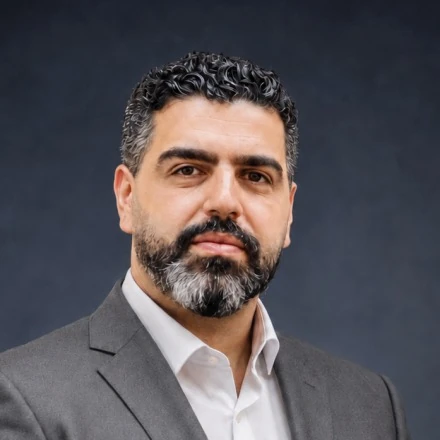
Dr. Maysara Falih Ibraheem AlMaarof

Dr. Maysara Falih Ibraheem AlMaarof

Owner and CEO, Future Guide

Academician and practitioner specialised in guided implant surgery and full mouth rehabilitation, and an international speaker in the Middle East in digital restorative dentistry. Associate at KHCMS — Kurdistan Higher Council of Medical Specialties.

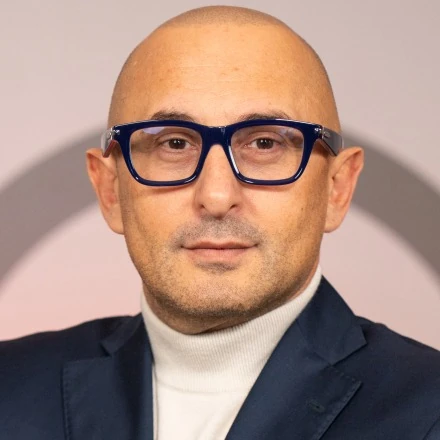
Giovanni Canino

Giovanni Canino

Founder of IML SA

Founder of IML SA, the Swiss manufacturer behind the IML implant system Future Guide distributes. His work is in implant design — thread morphology, the conometric connection, and medical-grade titanium with bio-active surface treatment — and in building IML as a bridge between European manufacturing and the Middle East. A CrossFit athlete outside the company, which he credits for the habit of finishing what he starts.

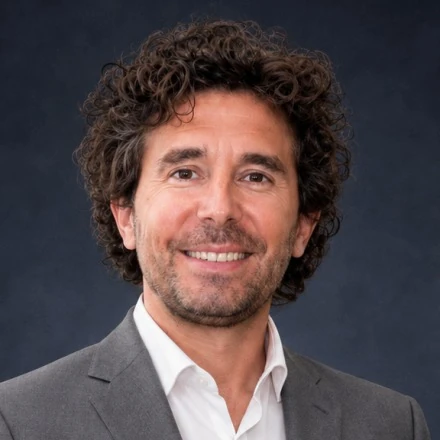
Dr. Alessandro Tardani

Dr. Alessandro Tardani

Implant surgery · 3-D planning

Academician and practitioner specialised in implant surgery, with a particular interest in 3-D planning and guided implants. Postgraduate masters in conservative dentistry and endodontics, in periodontics and implantology, and in implant prosthodontics and perioral aesthetics. International speaker on 3-D planning in implantology and guided implant surgery.

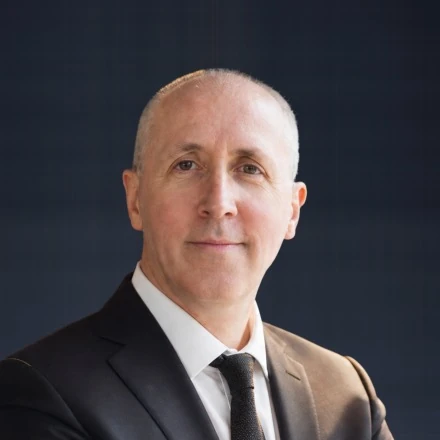
Eng. Massimo Ivani

Eng. Massimo Ivani

Founder of Media Lab

Entrepreneur in computer science and dental medicine. A degree in computer science and more than thirty years in the industry, and the founder of Media Lab — the Italian company behind Implant 3D, the planning software every case on this site is built in.

Course accessLifetime
CertificateAutomatic PDF
Exam requiredNo
LanguageArabic & English
FormatRecorded video
Built to move

The video host is not locked in

Where the videos live has not been decided. The player is one swappable component — changing the host later is a setting, not a rebuild.

Want the course before anyone else?

Tell us on WhatsApp what you want covered — the first cohort is being shaped now.

About us

A planning company, not a print shop

Future Guide plans guided implant surgery for dentists across Iraq and the Gulf, and distributes the Swiss and Italian implant systems those plans are built on.

Why we exist

Guided surgery should not be a privilege of large centres

Planning software, a trained eye and a printer are three separate investments. Most dentists in our region have the clinical skill but not the digital workflow — so cases that would benefit from a guide are placed freehand instead.

Future Guide removes two of those three. You keep the clinical judgement and the patient relationship; we do the planning and hand you a file your own printer can produce.

Legal nameGeneral Future Guide
Commercial Registration1508999
Health Licence1508999
Head officeBousher, Muscat
Founded2026
Team3 core + consultants

Registration and licence numbers are shown on every page of this site. Verify them before you send patient data anywhere — to us or to anyone else.

Leadership

Who reviews your case

Dr. Maysara Falih Ibraheem AlMaarof
Dr. Maysara Falih Ibraheem AlMaarof Founder, CEO and lead consultant

Academician and practitioner specialized in Guided Implant Surgery and Full Mouth Rehabilitation, and an international speaker in the Middle East in Digital Restorative Dentistry. Associate at KHCMS — Kurdistan Higher Council of Medical Specialties.

AM
Dr. Ahmed Mohammed Supervisor — operations and case intake

Handles case intake, doctor communication and the daily queue. He is the person who answers when you message us between 08:00 and 22:00.

Markets

Where we work

We serve Iraq and the Gulf today. Europe and the United States are planned, not active — we would rather tell you that than imply a reach we do not have yet.

  • Iraq — direct supply and case planning
  • Oman — head office and direct supply
  • United Arab Emirates — direct supply
  • Remaining GCC — partners being appointed
Why Future Guide

Four commitments we can be measured against

Swiss and Italian systems

Exclusive Middle East distributor for IML Swiss Dental Implants, RESISTA and the Implant 3D planning software.

A delivery commitment

3 working days for a report, 5 with a guide, 24 hours when the case is urgent.

One free revision

Every case includes one revision at no additional cost.

Consultant-led

Plans are reviewed by a clinician — not generated automatically by software.

Send us a case and judge for yourself

One case tells you more about a planning partner than any page of copy.

Sample case

What you actually receive

Two cases, each followed from the moment it is uploaded to the file the dentist prints: a zygomatic reconstruction and a subperiosteal framework. Every number is internally consistent, so you can judge the level of detail before you send us anything.

Illustrative cases. Neither is a real patient — no patient data appears anywhere on this site.
Sample case

Fully Guided Zygomatic Implant

The plan open in Implant 3D: the segmented bone, the guide seated on it, and the zygomatic trajectory running to the zygomatic body
A fully guided zygomatic plan, open in Implant 3D — the software these cases are planned in.
Practical guide

How to take a CBCT we can plan from

Most cases that stall do so for the same handful of reasons — and every one of them is decided in the two minutes before the scan runs. This is what we look for when a case arrives.

General imaging guidance for planning purposes. Always follow your scanner manufacturer's protocol and the radiation rules that apply where you practise.
Instant check

Check your scan before you send it

Drop the exported file in and the page reads its settings — voxel size, field of view, slice count, format — and tells you whether we can plan from it.

The file is read on your device. Nothing is uploaded, and the patient name inside the file is never read.

Drop the scan here or choose a file The DICOM series (zip or folder) and the digital impression — STL, PLY or OBJ